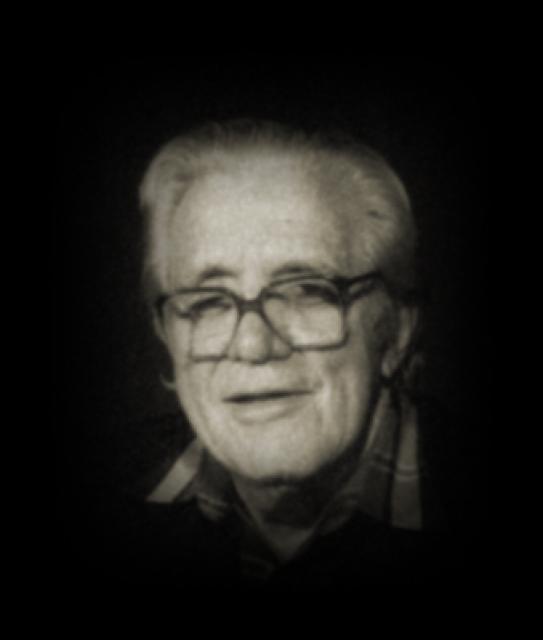
Carl Whitaker
 USA
USA- Carl Whitaker: A Pioneer in Family Therapy
- Early Life and Education
- Focus on Family Dynamics
- "Therapy of the Absurd"
- Emotional Process and Structure
- Balancing Confrontation and Support
- Academic Career and Influence
- Written Works
- Post-Retirement Activities
Carl Whitaker: A Pioneer in Family Therapy
Carl Whitaker was a renowned figure in family therapy, revolutionizing the field by challenging the prevailing orthodoxies of one-client therapy and isolation from family dynamics. As Richard Simon, editor of The Family Therapy Networker, stated, "His idea was the whole family was the client."
Early Life and Education
Carl Whitaker was born in Syracuse, New York, and pursued his undergraduate, medical, and graduate studies at Syracuse University, earning his M.D. in 1936. Following his obstetrics and gynecology residency, Whitaker embarked on his psychiatric career in 1938, developing a keen interest in treating individuals with schizophrenia.
Focus on Family Dynamics
Whitaker's observations of patients who seemingly recovered but experienced recurring issues upon returning to their families led him to focus on treating the entire family unit rather than solely the patient. He is credited with co-developing the symbolic-experiential approach to therapy and utilizing co-therapists—a practice that emerged during World War II while counseling workers at Oak Ridge, Tennessee, during the highly secretive atomic bomb project.
"Therapy of the Absurd"
Whitaker's approach, dubbed "therapy of the absurd," emphasized the unconventional and playful wisdom he employed to facilitate family change. Relying heavily on emotional rather than cognitive logic, his work was often misinterpreted as nonsensical, but more accurately, he operated on the "logic of the heart."
Emotional Process and Structure
Rather than intervening in behavioral sequences like strategic-systemic therapists, Whitaker centered his work on the emotional process and structure of the family. He intervened directly at the system's emotional level, drawing extensively on "symbols" and experiential life encounters, humor, play, and emotional confrontation.
Balancing Confrontation and Support
Whitaker's work exemplified a profound understanding of the family's emotional life; yet, to the casual observer, it often appeared abrasive or inappropriate. His "inappropriateness" was intended to confront or otherwise intervene in emotional dynamics he sought to expose, challenge, and transform. He firmly balanced intense emotional confrontation with the therapist's warmth and support.
Academic Career and Influence
Whitaker served as the head of the Department of Psychiatry at Emory University from 1946, where he treated schizophrenics and their families. He became a professor of psychiatry at the University of Wisconsin–Madison in 1965 until his retirement in 1982. While at the University of Wisconsin–Madison, he refined and articulated his ideas on psychotherapy, coining the term symbolic-experiential family therapy, and his national influence in the emerging field grew.
Written Works
Many of Whitaker's ideas on family therapy are presented in The Family Crucible, co-authored with Dr. Augustus Napier in 1978, a highly influential work in the field. In 1982, Dr. Whitaker's key articles on family therapy were compiled in From Psyche to System, edited by John R. Neill and David Kniskern.
Post-Retirement Activities
After retirement, Dr. Whitaker continued to teach and lecture extensively, and he and his wife, Muriel Schram Whitaker, consulted and supervised family therapists worldwide. His final book, Midnight Musings of a Family Therapist, was published in 1988 by W. W. Norton.


