Carlos Mariotti
 Brazil
Biography of Carlos Mariotti
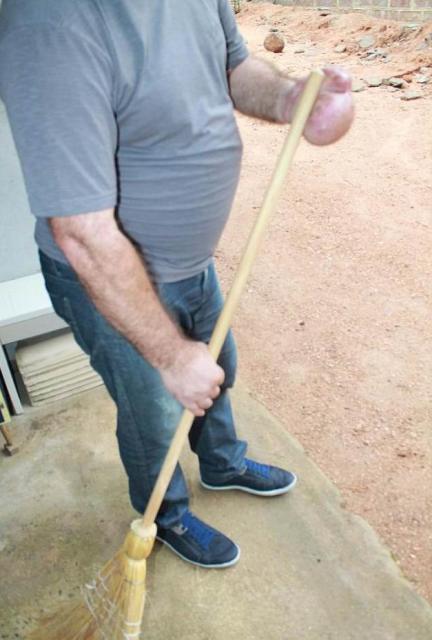
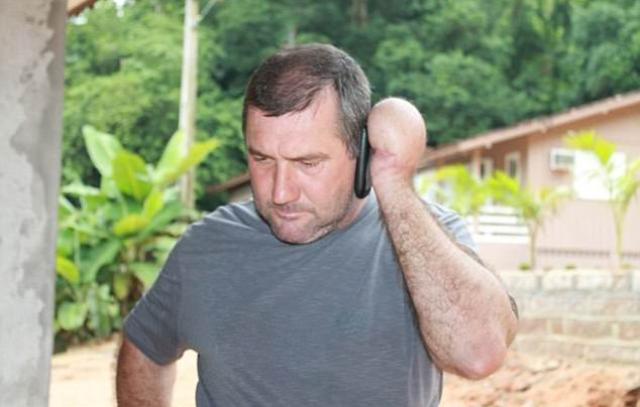
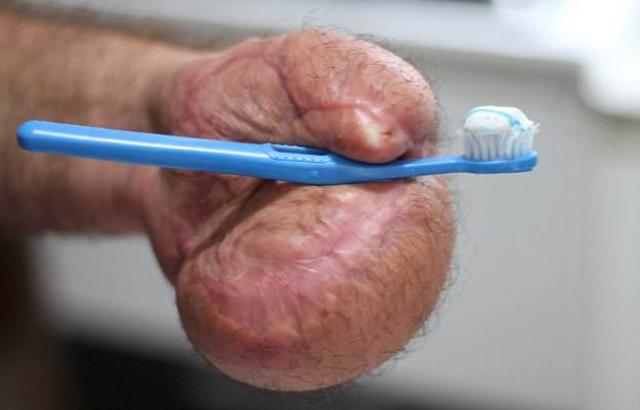
Carlos Mariotti, a former Brazilian machinist, had his mangled hand saved through innovative surgeries. His hand, disfigured in an accident, was sewn into his abdomen, and now functions as a glove-like limb. Although he still hopes to one day regain his fingers, the 43-year-old Mariotti has come a long way in his recovery. He proudly shares that he can now hold objects and use a mobile phone, tasks he once believed were impossible. It took months of practice for Mariotti to perform such simple tasks. His hand resembles a boxing glove, with a tiny thumb and a swollen mass of tissue where the other four fingers should be. The tiny remnants of his fingers are hidden within the glove-like structure, covered with skin transplanted from his abdomen. Additionally, skin from his thigh was also used in the transplant. The "glove-like" hand is the result of three innovative procedures performed by Brazilian surgeons who saved Mariotti from amputation. However, his journey is not yet complete. Mariotti is scheduled for another surgery that will allow doctors to separate and reconstruct his hand with individual fingers.
The Accident and the First Surgery
In March 2016, Mariotti, a former machinist from Sao Ludgero, had his hand torn to shreds after it got caught between two rotating shafts in a machine used to produce plastic cups and plates. Mariotti recalls the incident, stating that there were some issues with the machine and they needed to turn it off and restart it. He explains, "We inserted film rolls into three different cylinders. I don't know if it was a machine defect or a problem with another operator, but when we inserted the rolls, the machine started pulling my hand." "I screamed in agony... I managed to pull my hand out, but the skin on my palm and the back of my hand was torn off." Mariotti adds, "I lost all the nerves, veins, and the upper part of two of my fingers. My hand was completely disfigured." The tissues were destroyed, blood supply was cut off, and the bones and tendons were exposed before other workers came to his aid. The doctors initially informed Mariotti that they might have to amputate his hand. The final decision was made by orthopedic surgeon Boris Brandão, who chose to save the patient's hand. He placed a "soft tissue flap" directly in Mariotti's abdomen so that it would eventually connect with the back of his hand and cover it. Brandão took an astonishing photo showing Mariotti's shredded hand, lying on the operating table, "inserted" into his torso. Brandão explains, "I had never done anything like this before, but I knew it was possible. We separated the skin from the abdominal muscles and created a 'pocket' inside. I inserted the patient's hand 10 cm into the abdominal cavity. This prevented infection and necrosis, allowed the limb to reconnect to the blood supply, and restored the muscles and tissues." Mariotti's hand remained in his abdomen for 42 days. He describes the feeling as "really strange" because he could feel his fingers moving inside him. Every day, he reminded himself not to pull out his hand because it was stitched inside. He was afraid the stitches would come undone and ruin his chances of recovery. Throughout this period, Mariotti experienced "excruciating pain and discomfort."
Recovery and Rehabilitation
After six weeks of the first surgery, doctors removed Mariotti's hand from his abdomen. During the next procedure, a cut was made to separate the thumb from the rest of the hand. Mariotti was awakened and asked to move his limb, which hardly resembled a hand. He recalls, "The doctor told me to lift my hand, move it, and try to make some movements. He placed a piece of paper between my thumb and the remaining part of my hand. I remember him trying to pull the paper out, but he couldn't." Seven days later, the third procedure was performed, involving the collection of skin grafts from Mariotti's left thigh and transplanting them onto his palm. Unfortunately, the transplanted tissue died within a few days, and the dead skin had to be removed from the palm. The hand, shaped like a boxing glove, gradually healed with the help of physical therapy. However, Mariotti dislikes it when the remnants of his finger bones move within his clenched hand. He explains, "I feel the tiniest pieces of my fingers moving. Sometimes, the sharp bones poke inside and cause pain." Currently, he can put on socks, dress and undress, change shorts, and slowly button his trousers. He can take a shower and hold soap in his left hand like a cradle before it slips and falls to the floor. He adds, "There are moments when I'm about to pick something up, but then I remember I can't. I forget that my (previous) hand is no longer there, and when I remember, a strange and oppressive feeling overwhelms me." Mariotti hopes that the upcoming cosmetic operation will help him with his struggle. The initial procedure will be performed in two stages. The first surgery aims to divide the hand into two parts to achieve a V-shape, with two fingers in each half. A deeper cut between the thumb and index finger is intended to improve the flexibility of the thumb. After a month, the final procedure is expected to restore all four fingers. Mariotti's former employers have refused to support him, so he is currently actively fundraising to cover his medical expenses. The hiring company, "Zettapack Industrial de Plasticos," declined to comment on the matter.