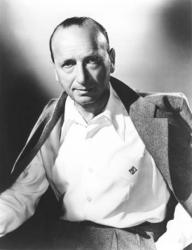
Carlos Saura
 Spain
Spain- The Leading Visionary of Spanish Cinema: Carlos Saura
- Teaching and Dismissal
- Debut and International Recognition
- A Critique of Spanish Society
- International Acclaim and Success
- Career Highlights
The Leading Visionary of Spanish Cinema: Carlos Saura
Early Life and EducationBorn in Huesca, Spain, as the son of a lawyer and a pianist, Carlos Saura embarked on his cinematic journey at the tender age of 18 as a professional photographer. Driven by his passion, he enrolled at the Instituto de Investigaciones y Experiencias Cinematografistas in 1953, where he honed his skills as a filmmaker.
Teaching and Dismissal
As a student, Saura directed an amateur short film and later a short graduate film. He continued to nurture his craft as a teacher at his alma mater, renamed the Official School of Cinematography, until 1963. However, his unwavering democratic beliefs proved controversial, leading to his dismissal.
Debut and International Recognition
Undeterred by setbacks, Saura embarked on a feature film career with "Los Golfos" (1962), a raw depiction of impoverished young criminals' aspirations to become bullfighters. Despite its technical flaws, it garnered attention at the Cannes Film Festival.
Saura's breakthrough came with "The Hunt" (1966), a psychological thriller that earned him the Silver Bear for Best Director at the Berlin International Film Festival. The film's allegorical critique of Francoist Spain became a hallmark of his work.
A Critique of Spanish Society
Under the watchful eye of Franco's censorship, Saura and his contemporaries employed subtle symbolism and parables to convey messages. "Peppermint Frappé" (1967) explored sexuality in a repressive society, while "Cria Cuervos" (1975) confronted the horrors of the Spanish Civil War.
International Acclaim and Success
Saura's reputation continued to soar with "Deprisa, Deprisa" (1981), which delved into the lives of streetwise kids, and "Carmen" (1983), a musical adaptation of Bizet's opera. These films brought him numerous awards, including the Golden Bear and the BAFTA for Best Foreign Language Film.
Career Highlights
Saura's body of work includes several films featuring Geraldine Chaplin, his long-time companion. He co-authored or wrote the screenplays for all his films, demonstrating his unwavering control over his cinematic vision. Throughout his illustrious career, Saura has been a leading light in Spanish cinema, capturing the essence of his homeland's culture and history.