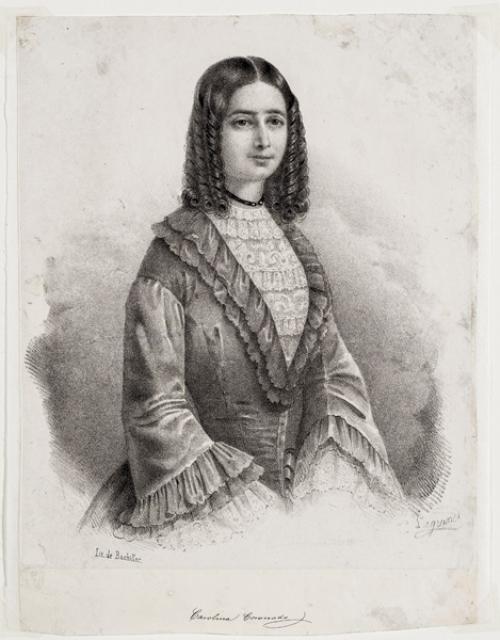
Carolina Coronado
 Spain
Spain- Carolina Coronado: Spanish Poet and Novelist
- Early Life and Poetic Debut
- Transition to Novels and Other Works
- Political Activism and Literary Influence
- Anti-Slavery Advocate
- Exile and Later Years
- Legacy and Recognition
Carolina Coronado: Spanish Poet and Novelist
Carolina Coronado was a renowned Spanish poet and writer whose contributions spanned various literary genres.
Early Life and Poetic Debut
Born in 1820, Coronado began writing poetry at the tender age of ten. Her first and only poetry collection, published in 1843, gained wide acclaim and established her as a prominent figure in the literary scene.
Transition to Novels and Other Works
Despite her initial success in poetry, Coronado shifted her focus to writing novels. Notable works include "Paquita" (1850) and "La rueda de la desgracia" (1873), which are considered among her finest literary achievements. She also wrote plays, including the comedy "El cuadro de la esperanza" and the historical drama "Alfonso IV de Aragon," as well as travelogues like "Del Tajo al Rheno."
Political Activism and Literary Influence
Coronado's home in Madrid became a hub for literary gatherings during the revolutionary period. Her residence served as a meeting place for progressive writers and a refuge for the politically persecuted, including renowned authors such as Emilio Castelar. Despite facing censorship due to her political beliefs, she published her works in newspapers and journals, gaining considerable recognition.
Anti-Slavery Advocate
Coronado was an ardent advocate against slavery and joined forces with Concepcion Arenal as a leading member of the Abolitionist Society of Madrid. Her poetry, such as the anti-slavery work written in 1868, sparked political controversy and contributed to the cause.
Exile and Later Years
When the revolutions broke out, Coronado and her husband lived in Lisbon, Portugal. They resided in the Mitra Palace in Poso do Bispo, despite losing their fortune invested in a transatlantic cable project. After her husband's death in 1891, Coronado passed away in the Mitra Palace on January 15, 1911.
Legacy and Recognition
Her writings and personal belongings remained in the palace and were later inherited by the Torres Cabrera family, now known as the Counts of Canillero. Coronado's remains are interred at the Badajoz Cemetery. Today, she continues to be recognized for her contributions to Spanish literature and her unwavering political advocacy.


