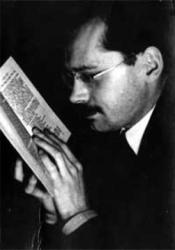
Chandra Mohan Radjnish
 India
IndiaBiography of Chandra Mohan Rajneesh
Chandra Mohan Rajneesh, also known as Bhagwan Sri Rajneesh and later as Osho, was a renowned Indian philosopher and the founder of a mystical teaching. He was born on December 11, 1931, in the small village of Kuchwada in the present-day Madhya Pradesh state of central India. He was born into a Jain family of textile traders and spent the first seven years of his life in his maternal grandparents' home.
Osho claimed that he had a spiritual enlightenment experience during meditation on March 21, 1953, in Bhawartal Park in Jabalpur. In 1957, he graduated with a master's degree in philosophy from Saugar University. He initially taught philosophy at Raipur Sanskrit College and later became a professor of philosophy at Jabalpur University in 1966.
In the 1960s, under the name Acharya Rajneesh, he traveled throughout India, delivering lectures on the most famous mystics of the East to large audiences. In 1962, he began conducting 3-10 day meditation camps. In 1966, he left his teaching position at the university and dedicated himself entirely to working with spiritual seekers who came to him from all over India. In 1969, a group of his friends established a foundation to support his work. The foundation rented a building in Mumbai where Chandra Mohan conducted daily darshans (spiritual meetings) and received visitors. On September 28, 1970, he started initiating disciples, who were given new names and wore orange or red robes, a mala (necklace) with 108 beads, and a portrait of Osho.
In 1974, an ashram was established in Pune, India, with Osho as its spiritual leader. During this period, new meditation techniques were developed, including dynamic meditation (1970), Kundalini meditation, and Nadabrahma meditation. In the spring of 1981, after a prolonged illness, Osho entered a period of silence. In June of that year, he was taken to the United States for medical treatment, as he was suffering from diabetes and asthma. His followers purchased the Big Muddy Ranch in Oregon for $5.75 million, and Rajneeshpuram, a settlement, was established on the ranch.
Over the four years that Osho resided in Rajneeshpuram, its popularity grew. By 1983, around 3,000 people attended the festival, and in 1987, approximately 7,000 people from Europe, Asia, South America, and Australia attended. The city developed amenities such as a school, post office, fire and police departments, and a transportation system with 85 buses. However, conflicts arose with local authorities regarding building permits and due to the violent actions of some commune residents. The tensions increased when Osho's secretary and press secretary, Ma Anand Sheela, made calls to violence. Osho remained in silence and was mostly isolated from commune life until 1984, when Sheela took over the management of the commune.
Internal conflicts also intensified within the commune, and many of Osho's followers who disagreed with Sheela's regime left. Facing difficulties, the commune's management, led by Sheela, resorted to criminal methods. In 1984, salmonella was added to the food in several restaurants in a neighboring town to manipulate election results. Under Sheela's orders, Osho's personal physician and two Oregon state officials were also poisoned. Although the physician and one of the officials fell seriously ill, they eventually recovered.
After Sheela and her team hastily left the commune in September 1985, Osho called a press conference to reveal their crimes and asked for a formal investigation. As a result of the investigation, Sheela and many of her associates were arrested and later convicted. Although Osho himself was not involved in the criminal activities, his reputation (especially in the West) suffered significant damage.
On October 23, 1985, a federal grand jury considered the indictment against Osho for immigration law violations during a closed session. On October 28, 1985, after flying to North Carolina, Osho was arrested without a warrant (at that time, the charges had not been officially filed), and his attempt to leave the United States was cited as the reason for his arrest. He was denied bail for the same reason. Following the advice of his lawyers, Osho signed an Alford plea, which meant that he did not admit guilt but agreed that there was enough evidence to convict him. As a result, Osho received a suspended sentence and was deported from the United States.
In November 1987, Osho claimed that during his 12 days in US prisons, he had been exposed to radiation from the mattress he slept on and had been poisoned with thallium. By the end of 1987, thousands of sannyasins and visitors passed through the gates of the Osho Commune International in Pune on a daily basis. Osho conducted daily darshans, but his health steadily deteriorated. He often emphasized that he couldn't be with his people for much longer and advised his listeners to focus on meditation. He said, "When I stop coming, my absence will highlight your own reality. Before, it didn't have such an opportunity to manifest. It is very good that you will be left alone with yourself because your pilgrimage will not begin until you realize who you are and where you are. Important days lie ahead, and remember, your reality is everything that you experience. All the meditation techniques I have given do not require my presence. Whether I am here or not, it doesn't matter. It depends only on you. For meditation, your presence is required, not mine. There is only one religiosity - the religiosity of love. There is only one truth - the truth of joy, life, and happiness. This planet Earth is one, and all of humanity is one whole. We are fragments of each other."
On October 6, 1989, Osho formed an inner circle consisting of twenty-one of his closest disciples, who were responsible for the administrative management and decision-making in the commune. In June and July, the sannyasin university was established, offering a wide range of seminars and group programs.
On January 17, Osho's health significantly deteriorated. He appeared at the evening gathering only to greet the attendees. It was evident that he struggled to move around.
On January 19, 1990, Osho passed away. He refused the doctors' offer of immediate medical intervention. He told them, "The universe itself measures its time." He closed his eyes and died. Osho's body was placed in a hall for a mass gathering and then cremated, as per Eastern tradition. Two days later, the remaining ashes were transferred to the Chuang Tzu Hall, the room that was meant to be his new bedroom. Some of the ashes were also taken to Osho Tapoban, Nepal. A plaque was placed above the ashes with the words that Osho dictated months before his death: "OSHO. Never born, never died, only visited this planet Earth from December 11, 1931, to January 19, 1990." It is essential to be vigilant and aware when interpreting Bhagwan Sri Rajneesh's teachings about the true nature of humans and the methods of reaching it. He often said, "I have not come to teach you, I have come to awaken you." Osho did not write books but conveyed his teachings through discourses targeted at specific audiences or even individuals. It is not surprising that with this contextual approach, some of the material was presented differently each time, and in some discourses, there could be significant discrepancies from what was said before. He aimed to bring individuals to a point of equilibrium, where they wouldn't be one-sided and always remain in search. Some people find themselves perplexed by the contradictions in Osho's discourses. He addressed this by saying, "My friends are surprised: 'Yesterday you said one thing, and today you say something else. Which one should we follow?' I can understand their confusion. They have only seized upon the words. For me, conversations have no value; only the gaps between my words are valuable. Yesterday, I opened the doors to my emptiness using certain words; today, I open them using different words. What is valuable to me is the emptiness that manifests between the words. Doors can be made of wood, gold, silver; they can be adorned with leaf and flower patterns. Whether they are simple or ornate, it doesn't matter. Only the open door, the empty space, matters. For me, words are just a tool to open the emptiness." Singing, dancing - these are definitely languages of joy, but one can learn the language without knowing joy. This is what all of humanity is doing: people are only learning gestures, empty gestures.
"What is the cause of your joy, Master?" Osho clarifies this question by saying, "Joy has no cause; joy cannot have a cause. If joy has a cause, then it is not joy at all. Joy can only be causeless, unconditioned. There is a cause for illness, but is there a cause for health?... Health is natural, health is as it should be. Illness is how it should not be. Illness means something is wrong. When everything is in order, a person is healthy. When everything falls into place, a person is healthy; there is no cause for it. Ask a doctor, 'Why am I healthy?' - he will not answer. He can answer the question, 'Why am I sick?' because sickness has a cause. He can diagnose the cause, find out why you are sick, but nobody can find the cause of why you are healthy. Health is natural, health is how it should be. Illness is unnatural, illness is how it should not be. Illness means something is wrong. When everything is right, a person is healthy. When everything is in tune, a person is healthy; there is no cause for it."
Rajneesh strongly disapproved of any kind of organization, including religious ones, and repeatedly warned his followers against establishing organizations based on "following." He recommended that, in the event of his death, his disciples should immediately go in search of a "living Master."
However, this directive was not followed, and after the Master's departure, the "new sannyas" movement organized numerous Osho centers worldwide. The most famous of these is the meditation resort in Pune, India, where group meditations developed by Rajneesh and his disciples are conducted. With the onset of the perestroika era, many of Osho's books were translated and published in Russian. Currently, there are dozens of small Osho groups in various cities in Russia and the CIS.