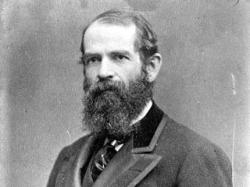
Charles Flint
 USA
USA- Charles R. Flint: A Visionary Businessman
- Early Career
- Consular and Diplomatic Roles
- Business Ventures
- Legacy
Charles R. Flint: A Visionary Businessman
Charles R. Flint, an American businessman, known as the "father of trusts," was a prominent financier and entrepreneur. Born in 1850 in Thomaston, Flint's father served as the commander of one of the largest fleets under the American flag at the time.
Early Career
At the age of 21, Charles R. Flint became a partner in a New York-based company that supplied ships to various countries in Latin and South America. Within a year, he joined the renowned W. R. Grace and Co., where he held the position of an agent for international relations. Flint's involvement in multimillion-dollar deals for the supply of specialized equipment to sugar plantations in Peru and other Latin and South American countries further solidified his reputation as a successful businessman.
Consular and Diplomatic Roles
From 1876 to 1879, Flint served as the Consul of Chile in New York. Later, he became the Consul General in the United States, representing the interests of Nicaragua and Costa Rica. Flint's entrepreneurial spirit and strong ambition were always noticeable throughout his career.
Business Ventures
One of Flint's notable achievements was the establishment of the U. S. Rubber, a powerful conglomerate that brought together numerous companies under one roof. With the onset of the Spanish-American War, Flint expanded his interests to include the arms trade, particularly as an agent for the acquisition of naval vessels for the United States.
Later on, Flint's attention turned to a new business venture, which took the form of two major mergers — American Chicle and American Woolen. Notably, Flint collaborated with the Wright brothers, implementing patents registered under their names worldwide. Recognizing the advantages of consolidating diversified companies, Flint established himself as the "father of trusts." This approach allowed for business stability, as different products could compensate for market fluctuations and mitigate potential losses.
Legacy
Charles R. Flint's most significant contribution to business development was the creation of C-T-R, known today as IBM. By applying the principles of trusts, Flint revolutionized the concept of business conglomerates and offered highly effective business solutions that continue to be implemented in large companies to this day.
It is undeniable that Flint made an incredible contribution to the evolution of business practices. His innovative ideas and strategies have had a lasting impact on the corporate world, ensuring his legacy as a visionary businessman.