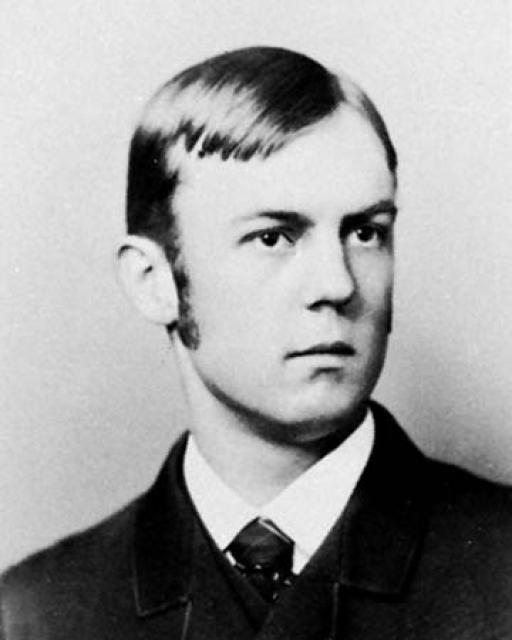
Charles Horton Cooley
 USA
USA- Charles Horton Cooley: A Pioneer in Social Psychology
- Career in Sociology
- Theoretical Contributions
- Social Cognition and Verstehen
- Legacy
Charles Horton Cooley: A Pioneer in Social Psychology
Early Life and EducationCharles Horton Cooley was born in Ann Arbor, Michigan, in 1864. He studied at the University of Michigan, earning his bachelor's degree in 1887 and his doctorate in 1894.
Career in Sociology
Upon completing his studies, Cooley began teaching sociology at the University of Michigan. He quickly rose through the ranks and became a professor in 1902. Over the course of his career, he served as president of the American Sociological Association (ASA) twice.
Theoretical Contributions
Cooley's sociological theory is deeply rooted in social organicism, the idea that society operates as a living organism. However, his interpretation of organicism differed from traditional approaches. He emphasized the mental nature of the social organism, referring to it as a "super-self" or a "great consciousness."
Cooley argued that human beings are inherently social creatures, shaped by their interactions within primary groups, such as the family and neighborhood. These groups instill in individuals a shared set of social values, norms, and understandings that constitute a universal human spiritual environment.
Social Cognition and Verstehen
According to Cooley, the social nature of human beings requires a unique form of cognition, which he termed "sympathetic insight." This insight enables individuals to imagine and understand the inner processes of others. Max Weber later referred to this concept as "verstehen," a key principle of what became known as verstehen sociology.
Legacy
Charles Horton Cooley made significant contributions to the development of social psychology. His ideas on social nature, sympathetic insight, and verstehen sociology continue to influence contemporary sociological research and theory. He is widely regarded as one of the founding fathers of the discipline.


