Chernaya koshka
 Russia
The Black Cat Gang
The emergence of urban legends is often difficult to explain, and their longevity astounds the imagination. Tales of elusive criminals, leaving a drawing of a black cat at the scene of their crimes, had captivated Muscovites for almost a decade, with the cult film "The Meeting Place Cannot be Changed" forever cementing the images of fearsome criminals and courageous MUR officers in the memory. However, surviving documents and memories tell a completely different story - one that is equally fascinating as the adventures of the screen heroes, but even more frightening in its reality, which at first glance seems like fiction.
The First Wave of Stories
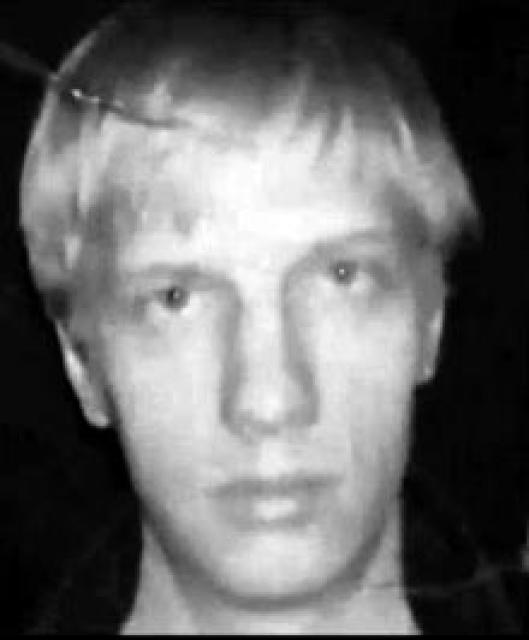
The first wave of stories about the "Black Cat" gang came at the end of the war. The late 1940s and early 1950s were a rather turbulent time, with theft and robbery flourishing. In one such case, the police apprehended several students from a vocational school who were involved in thefts and found the "Manifesto of the Black Cat" in their possession. However, rumors of murders and drawings persisted, and there was a reason for it. In December 1949, a food warehouse in Tushino was robbed, and the security guard was killed. Witnesses reported that the leader was a tall, blond young man. A week later, a bank was robbed, once again involving a tall blond man. Despite the investigation, an operative named Kochkin was shot in Khimki, and the robberies and murders continued. The main targets were savings banks and grocery stores, but one time the apartment of a prominent union official was also targeted. The situation was exacerbated by the fact that at that time Stalin was recovering from a stroke, and a power struggle was underway between Beria and Khrushchev, who had been appointed as the First Secretary of the Moscow Communist Party. The crime spree, including one incident that occurred in close proximity to Stalin's dacha in Kuntsevo, could have had fatal consequences for Khrushchev, who threatened the Moscow police with severe consequences and demanded the immediate elimination of the criminals. Mass arrests and the harshest interrogation methods yielded no results. Moreover, criminal authorities, contrary to unwritten laws, arranged a meeting with representatives of the MUR and declared that their "protégés" had no connection to these robberies and murders. As it turned out later, the reason for the failure of the criminal investigation was that the fearsome criminals did not belong to the criminal world; moreover, the lifestyle they led could have been the plot of a lyrical film about the lives of young workers, athletes, and students. The tall blond man repeatedly seen at the crime scenes was named Ivan Mitin. At that time, he was just over 20 years old, working as a shift supervisor at Plant No. 34, and had even been recommended for the Order of the Red Banner of Labor for his good work. He also played in the plant's hockey team. The "Zenit" stadium in Krasnaya Gorka was the center of youth life, where a friendly group constantly gathered. Besides Mitin, the group included several young workers, a student from the Moscow Aviation Institute named Lukin, an excellent student and active Komsomol member, as well as two cadets from higher military schools. They formed the gang that terrorized Moscow for over three years, committing 11 murders, injuring 18 people, and stealing over 300,000 rubles. Later, Bolotov, a Party member and a Stakhanovite worker at a defense plant, was also involved in the youth group and developed plans for their crimes. The gang's guarantee of impunity was strict discipline and an impeccable way of life; it can be said that luck also accompanied them to some extent. However, any criminal is eventually brought to justice.
The Breakthrough
The first clue that led to the gang's capture was a casual phrase uttered by Lukin. During a robbery at a savings bank in Mytishchi in February 1953, the cashier managed to press the alarm button, and the officer on duty called the bank. Lukin picked up the phone and, when asked, "Is this the savings bank?" he replied, "No, the stadium." The criminals managed to escape again, but Lukin's phrase became the thread that allowed investigators to trace the gang. Vladimir Pavlovich Arapov, who was involved in the investigation and later became the prototype for the character Volodya Sharapov in the legendary film, drew the right conclusion: all the robberies occurred near stadiums, and it was quite plausible that young, trained individuals involved in sports were responsible for the crimes. At the same time, Krasnogorsk, where an excellent sports base and a well-known stadium were located, was not mentioned in the incident reports even once, so it was quite possible that the criminals resided there. The police began closely observing the behavior of young people at the stadiums, and it didn't take long for an unusual incident to occur. Lukin was again the instigator. Near the stadium in Krasnogorsk, there was a barrel of beer, which he decided to roll away. When the angry saleswoman shouted, he gave her a large sum of money and started treating everyone present to beer, including an informant from the police. This incident itself did not give rise to suspicion. Lukin and his friends had an impeccable reputation, but Mitin's appearance coincided with the description of the gang's leader. Surveillance of Lukin allowed investigators to search his belongings on a train, where they found bank packaging containing money stolen from the savings bank. Establishing the connections of the other gang members plunged the criminal investigation into shock - they had to arrest two naval cadets on charges of armed banditry, who had connections to defense technology. Out of the twelve gang members who stood trial, only Vyacheslav Lukin, the youngest in the gang (born in 1959), expressed remorse. His father, a police officer, sought psychiatric treatment after his son's trial and died shortly after. Mitin and his closest accomplice Samarin were sentenced to death, while the other participants received varying terms of imprisonment. Lukin, who was sentenced to 25 years in prison, died a year after his release.


