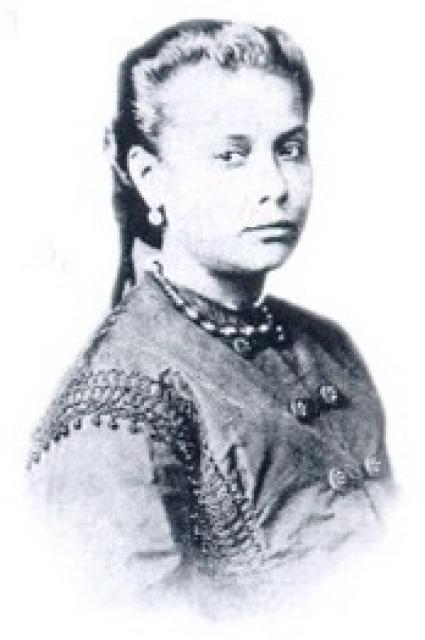
Chiquinha Gonzaga
 Brazil
- Early Life and Education
- Musical Prodigy and Unfortunate Marriage
- Collaboration with Joaquim Callado
- Musical Career and Social Activism
- Controversial Love and Legacy
- Recognition and Death
Early Life and Education
Francisca Edwiges Neves Gonzaga, also known as Chiquinha Gonzaga, was born on October 17, 1847, in Rio de Janeiro, Brazil. As the illegitimate daughter of a high-ranking officer and a mulatto woman, her early life was marked by societal stigma. However, her father eventually acknowledged her and married her mother, providing Chiquinha with a privileged upbringing for a woman of her time. Her education emphasized literacy, foreign languages, mathematics, catechism, and music.
Musical Prodigy and Unfortunate Marriage
Chiquinha's musical talent manifested itself at an early age. By the age of 11, she had composed her first song. In 1863, against her wishes, she married Jasinto Ribeiro do Amaral, a businessman who forbade her from pursuing music. The marriage bore three children before Chiquinha ultimately left her husband in 1869, becoming the first woman in Brazil to secure a divorce.
Collaboration with Joaquim Callado
Following her separation, Chiquinha became acquainted with Joaquim Callado, a renowned flutist and founder of the "choro" musical style. Callado introduced her to the music world, where she became known as "Chiquinha Gonzaga." He invited her to join his "Choro do Callado" ensemble as a pianist and dedicated the composition "Querida por Todos" to her.
Musical Career and Social Activism
Chiquinha's career as a musician flourished despite societal prejudice. She became the first pianist to perform choro music and composed over 250 songs, polkas, waltzes, tangos, and other genres. She also became politically active, advocating for the abolition of slavery in Brazil. In 1885, she became the first female conductor in Brazil, leading the one-act opera "A Corte na Roca."
Controversial Love and Legacy
In 1899, Chiquinha began a controversial relationship with Joao Bautista Fernandes Lage, a man 36 years her junior. Their romance lasted until her death and was a subject of public scrutiny. Chiquinha's legacy as a composer and activist extends to her fight for copyright protection in Brazil. In 1917, she became a member of the Brazilian Union of Theater Authors (SBAT).
Recognition and Death
Chiquinha Gonzaga's contributions to Brazilian music were finally recognized in her later years. In 1916, the Brazilian Congress passed a Civil Code that included copyright laws. She died on February 28, 1935, leaving behind a rich musical heritage that continues to inspire Brazilians to this day.




