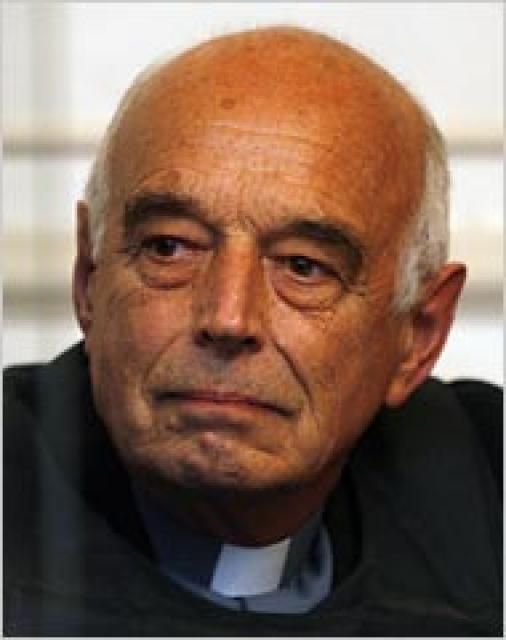
Christian Federico Wernich
 Argentina
Christian Federico von Wernich was an Argentine Catholic priest whose work as a police chaplain placed him inside the machinery of repression during the country’s 1976–1983 military dictatorship. In 2007, a federal court in La Plata sentenced him to life imprisonment for his role in crimes against humanity, making his case a landmark in Argentina’s reckoning with the participation of members of the clergy in state violence.
Early Life and Ministry
Von Wernich was born on May 27, 1938, in Argentina. He joined the Catholic clergy and served in the Diocese of Nueve de Julio. His public career took a consequential turn in July 1976, when he was appointed chaplain to the Buenos Aires Province Police. He worked with its Investigations Directorate, which was led by Miguel Osvaldo Etchecolatz, a senior police official later convicted of crimes against humanity.
The military government called its rule the National Reorganization Process. In practice, security forces abducted people they regarded as opponents, held many in clandestine detention centers, and subjected them to torture and murder. In this setting, a priest’s access to detainees and the trust associated with his religious office carried particular weight.
Role During the Dictatorship
Survivors testified that von Wernich visited clandestine detention sites and used his pastoral role to approach prisoners. The court found that he obtained information from detainees, encouraged them to cooperate with their captors, and helped sustain the system of illegal detention and torture. His presence could make promises of help or release seem credible to people who had been isolated from their families and the outside world.
The 2007 trial examined his involvement in the persecution of numerous detainees, including journalist Jacobo Timerman. The federal court found him responsible for 41 aggravated illegal deprivations of liberty, 31 aggravated torture offenses, and seven aggravated homicides. It characterized the crimes as part of the crimes against humanity committed in Argentina between 1976 and 1983, and imposed life imprisonment and permanent disqualification from public office. The ruling was later upheld and became final.
Arrest, Trial, and Legacy
After leaving Argentina, von Wernich served at a parish in El Quisco, Chile. His whereabouts became a public issue in 2003, and he was arrested in Argentina that September. The trial opened in La Plata in 2007. Von Wernich declined to testify during the proceedings, and the court’s judgment rested on the evidence presented, including survivors’ accounts.
He became the first Catholic priest in Argentina to be convicted for participation in crimes against humanity during the dictatorship. The case drew attention to the ways religious authority could be used within state institutions to gain access to prisoners and assist repression. Von Wernich remains imprisoned under his life sentence.


