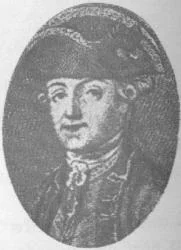
Chūichi Nagumo
Chūichi Nagumo commanded Japan’s carrier striking force in some of the most consequential naval operations of the Second World War. His name is closely tied to the attack on Pearl Harbor and the defeat at Midway, where four Japanese aircraft carriers were lost. A career officer trained in torpedo warfare rather than naval aviation, he rose to command a fleet whose power depended on carrier aircraft and whose fortunes shifted dramatically in 1942.
A naval career
Nagumo was born on March 25, 1887, in Yonezawa, Japan. He graduated from the Imperial Japanese Naval Academy in 1908 and built his early career at sea, serving aboard battleships, cruisers, and destroyers. He became known as a torpedo specialist and held several ship and staff commands.
In 1940 he was promoted to vice admiral. The following year, he was appointed commander of the First Air Fleet, Japan’s main carrier force. The appointment reflected his seniority, although he had no special background as an aviator. His new command placed him at the center of Japan’s opening offensive in the Pacific.
Pearl Harbor and Midway
On December 7, 1941, Nagumo led the carrier force that attacked the U.S. Pacific Fleet at Pearl Harbor. In the months that followed, his ships carried out major operations across the Pacific and Indian Ocean, including raids on Darwin and Ceylon. These early campaigns expanded Japan’s reach and brought a succession of victories.
That momentum ended at the Battle of Midway in June 1942. U.S. forces surprised the Japanese fleet and sank all four of Nagumo’s carriers present. The defeat cost Japan experienced crews and aircraft as well as ships, and ended the fleet’s ability to dominate the Pacific in the same way. Nagumo survived and continued to command Japan’s remaining carriers through the battles of the Eastern Solomons and Santa Cruz later that year, but he was eventually reassigned from the carrier force.
Saipan and final days
In 1944 Nagumo was placed in command of Japanese naval forces in the Mariana Islands. As U.S. forces invaded Saipan in June, the island became a major battle in the drive toward Japan. Japanese forces were overwhelmed, and the defense collapsed. Nagumo died by suicide on July 6, shortly before the island fell.
Legacy
Nagumo remains one of the most recognizable Japanese commanders of the Pacific War, in large part because he led the carrier force at Pearl Harbor and Midway. His career also reveals the limits of seniority-based command during a period when naval aviation was rapidly changing warfare. The victories of 1941 and early 1942 were followed by the devastating loss at Midway, while his final command ended amid the fall of a strategically important island.