Clive Lewis
 Great Britain
- Early Life and Influences
- Education and Military Service
- Conversion to Christianity
- Literary Career
- "The Chronicles of Narnia"
- Later Works and Legacy
Early Life and Influences
Clive Staples Lewis, renowned as C.S. Lewis, was born in Belfast, Ireland. At a tender age of four, after the tragic loss of his beloved dog, Lewis adopted the alias "Jacksie" and later "Jack." His childhood fascination with talking animals inspired him to write and illustrate his own stories. Lewis's literary pursuits were fueled by his father's extensive library.
Education and Military Service
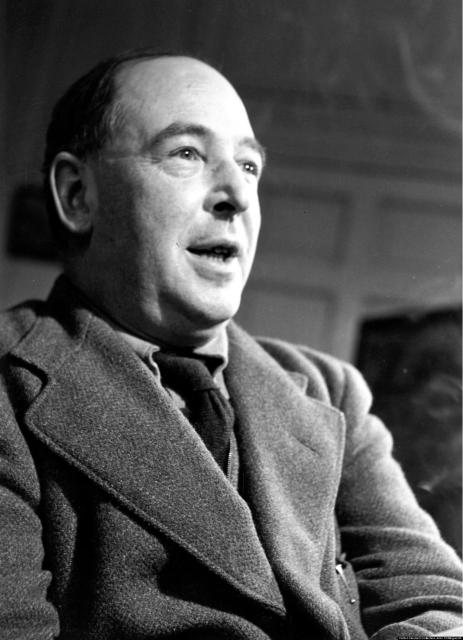
Lewis pursued his education at Oxford University, but his studies were interrupted by his service in the British Army during World War I. A tragic incident in 1918 left him injured and led to a crisis of faith, deepening his skepticism towards religion.

Conversion to Christianity
Through the influence of his friend and colleague J.R.R. Tolkien, Lewis gradually transformed from an atheist to a theist and eventually converted to Christianity in 1931. Despite his affinity for Anglicanism, Lewis remained open to other Christian traditions.

Literary Career
In 1933, Lewis published "The Pilgrim's Regress," reflecting his journey towards Christian faith. Although poorly received, the book garnered some support. His "Space Trilogy," commenced in 1938, delved into the dehumanizing trends of modern science fiction.

"The Chronicles of Narnia"
Lewis's most renowned work, "The Chronicles of Narnia," debuted in 1950. This fantasy series of seven books has captured the hearts of readers worldwide and become a staple of children's literature. The Christian themes and accessible language have resonated with audiences of all ages.
Later Works and Legacy
Throughout his life, Lewis continued to write extensively on religious and philosophical topics. In 1956, he married American author Joy Davidman, who passed away from cancer in 1960. Lewis died three years later from renal failure. Despite the overshadowing deaths of President John F. Kennedy and Aldous Huxley on the same day, Lewis's literary legacy endures as a testament to his profound insights and captivating writing style.