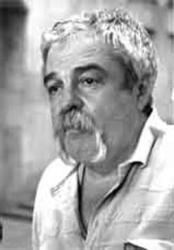
David Cronenberg
 Canada
Biography of David Cronenberg
David Cronenberg, a Canadian film director and screenwriter, was born on March 15, 1943, in Toronto, Canada, into an intellectual Jewish family. His father was a writer, and his mother was a musician. Cronenberg developed an interest in cinema while studying at university, and during this time, he made two experimental films - "Stereo" (1969) and "Crimes of the Future" (1970). These early films already showcased the director's style and his unique approach to filmmaking. Throughout his career, Cronenberg focused on the theme of the deformation of the human being in the 20th century, which invariably turns them into an animal, a computer program, or a mechanism. This fascination with mutation is evident in his love for various types of mutants.

Most of Cronenberg's films, made before the 2000s, can be classified as body horror, which literally means "horror of the body." His first feature film, "Shivers" (1975), along with subsequent films like "Rabid" (1977) and "Scanners" (1981), explored mutations caused by medical intervention. These films combined elements of thriller, detective stories, and shocking horror, and introduced the social and philosophical aspects of the director's work, making them significant films of that time. However, these early works shocked the public, and critics did not see anything supernatural in them, simply categorizing them as second-rate horror films. Only a few were able to recognize the deep philosophical meaning within them.

Everything changed with the release of "Videodrome" (1982), which became one of the defining films of the decade. Often referred to as a prophetic film, "Videodrome" explores the consequences of television's influence on human beings. While some saw it as a prediction of the internet, Cronenberg stated that it was a meditation on TV and an exploration of different forms of reality. The film received several awards at science fiction film festivals and was enthusiastically received by many critics.

Cronenberg's next film, "The Dead Zone" (1983), based on Stephen King's novel, marked his first adaptation of someone else's screenplay and became one of the best film adaptations of King's works. The director's success continued with the release of "The Fly" (1986), which tells the story of a young scientist who accidentally turns himself into a fly. This film became Cronenberg's most famous work and achieved cult status. Similarly, "Naked Lunch" (1991), based on a surrealist novel by William S. Burroughs, became a cult film. The film explores the story of a drug-addicted writer who gradually loses the ability to distinguish between delusion and reality. It was believed that Burroughs' book was impossible to adapt to the screen, but according to Cronenberg, this challenge was the defining factor in his choice to make the film.

In 1996, Cronenberg directed his most scandalous and controversial film, "Crash," based on James Ballard's novel, which depicts a form of sexual deviation where a group of people finds sexual pleasure in car crashes. The film sparked numerous discussions, and Cronenberg himself declared it a very dangerous film. However, it did not prevent the film from receiving a special jury prize for artistic courage and bravery at the Cannes Film Festival. The film's presentation of an incendiary mix of violence, sex, and road romance could not be described as anything other than artistic courage.

Cronenberg shifted his focus to violence rooted in human nature in the 2000s. His later films, which received enthusiastic reviews from critics, portrayed a dark, bleak world of cruelty and injustice. In 2002, Cronenberg's film "Spider" was one of the highlights at the Cannes Film Festival, and in 2005, he presented his new creation, the crime drama "A History of Violence," which tells the story of a former criminal trying to forget his past and return to a normal life. His subsequent works, the suspense thriller "Eastern Promises" (2007) and the biographical drama "A Dangerous Method" (2011), confirmed Cronenberg's transformation and his shift toward more classical stories and characters. Interestingly, the actors who starred in these films, such as Viggo Mortensen, Michael Fassbender, Keira Knightley, and Naomi Watts, received high praise from the critics and were nominated for numerous awards.
In 2014, Cronenberg presented his film "Maps to the Stars," which he described as a satire on Hollywood. Looking back, it is safe to say that David Cronenberg has become a true innovator in cinema, bringing new forms of expression and aesthetics. He has directed dozens of films, many of which have achieved cult status and inspired numerous imitations and interpretations. All of this allows us to consider Cronenberg as one of the leading directors of independent cinema.