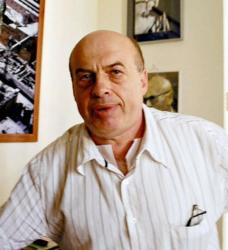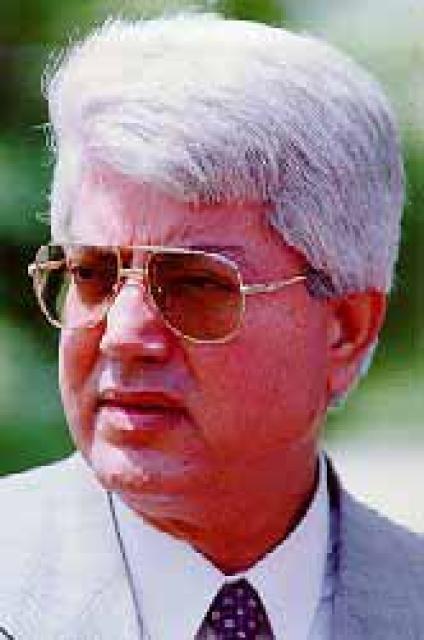
David Levy
 Israel
David Levy: A Biography
David Levy, a former Minister of Foreign Affairs of Israel, is a renowned politician who has defied all expectations. Born and raised in Casablanca, Morocco, Levy immigrated to Israel in 1958 and settled in the small provincial town of Beit She'an near the Jordanian border. Despite his limited education, with only seven years of schooling, Levy quickly established himself as a prominent figure in Beit She'an's community.
Levy's political career began when he became actively involved in advocating for the rights of construction workers while working on a construction site. His efforts led to his election as the secretary of the Northern District trade union and gained the support of the local branch of the Mapai party, the historical precursor to the Labor party.
However, fate had different plans for Levy. In 1969, the Likud party, then known as Gahal, struggled to find a suitable candidate for the position of mayor of Beit She'an. After much deliberation, Levy was approached and agreed to run for the position. He won the election and served as the deputy mayor, making a significant impact on the city's governance.
Despite his initial success, Levy's municipal career came to an abrupt end when the city council was dissolved and he was dismissed along with the mayor. However, this setback opened new opportunities for Levy. Menachem Begin, the leader of the Likud party, recognized Levy's potential and appointed him as the chairman of the Tehiya-Lavan faction in the Histadrut, Israel's largest labor federation.
Levy became an indispensable member of all subsequent Likud-led governments, serving in various ministerial positions. Although he faced criticism and ridicule from his political opponents, Levy remained steadfast and resilient. In 1981, he achieved the position of Deputy Prime Minister and Minister of Construction, shedding the negative stereotypes associated with him.
In 1982, as Prime Minister Menachem Begin's health deteriorated, Levy openly declared himself as Begin's successor, igniting a political battle within the Likud party. Despite losing the internal party elections to Yitzhak Shamir, Levy refused to back down and eventually formed his own party called "Gesher" after the Likud's defeat in the 1992 elections.
Levy's ideological principles remained firm, and he continued to align himself with the right-wing bloc. He was instrumental in the withdrawal of Israeli troops from Lebanon in 1985 but did not support the Oslo Accords. Levy strongly criticized former Prime Minister Benjamin Netanyahu, whom he considered an usurper. However, before the 1996 elections, Levy rejoined Likud, understanding that he would not succeed independently in the Knesset. In return, Netanyahu appointed him as the Minister of Foreign Affairs.
Although Levy excelled in diplomatic engagements and social gatherings, his lack of fluency in English hindered him from fully participating in international affairs. Despite this limitation, Levy's charisma and charm compensated for his linguistic shortcomings. However, his tumultuous relationship with Prime Minister Ehud Barak eventually led to his resignation. Nevertheless, Levy's alliance with the current Prime Minister, Ehud Barak, enabled him to secure a seat in the Knesset once again and regain the position of Minister of Foreign Affairs.
As a politician, Levy is known for his emotive nature and religious beliefs. His unwavering devotion to the Land of Israel and Zionism remains a core aspect of his character. He firmly believes in seeking justice for Israeli citizens and protecting the country's interests in the face of adversaries. Levy's passionate approach to politics has made him a symbol of determination and resilience in Beit She'an and beyond.