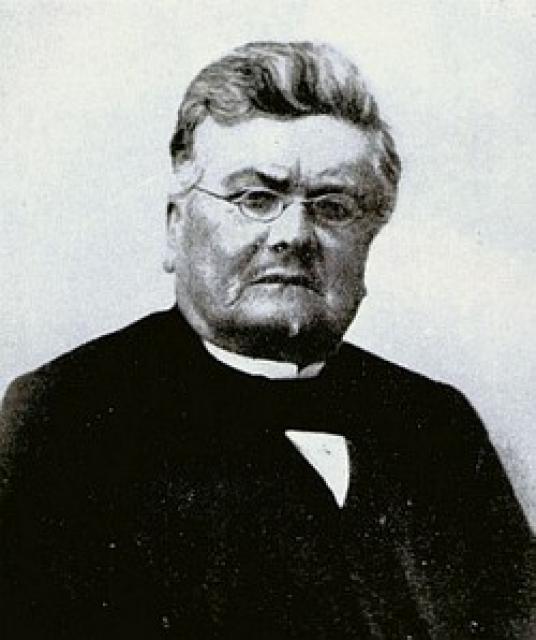
Domenico Mustafa
 Italy
Italy- Biography of Domenico Mustafa
- Early Years and Career
- Appointment as Director of the Sistine Chapel
- Teaching and Opera Potential
- Later Life and Legacy
- Legacy
Biography of Domenico Mustafa
Domenico Mustafa was an Italian castrato singer, musician, and director of the Sistine Chapel. He began singing at the Sistine Chapel in the Vatican in 1848 and later became known as a composer, authoring famous works such as "Miserere" and "Tus es Petrus secundum magnum".
Early Years and Career
Like many singers of his time, Domenico underwent castration as a child, which resulted in his pure soprano voice and exceptional coloratura technique that captivated Italian audiences. He started his career as a singer in the Sistine Chapel in 1848 and quickly gained recognition for his talent.
Appointment as Director of the Sistine Chapel
Domenico's business acumen, honesty, and integrity earned him the position of candidate and later, in 1878, the director of the Sistine Chapel (Direttore Perpetuo). However, he had already been involved in the management of the chapel before 1878. He was also an honorary member and president of the music organization "Società Musicale Romana" in Rome.
Teaching and Opera Potential
Domenico Mustafa was also a renowned vocal teacher. He gave vocal lessons to the celebrated French soprano Emma Calvé, who described him as "strange," "genderless," "supernatural," and "superhuman." Despite his teaching and directing roles, Domenico almost returned to the opera stage when Richard Wagner composed his opera "Parsifal" in 1882. However, a confusion in the casting led to the part intended for Domenico being given to a baritone instead.
Later Life and Legacy
In 1902, Domenico Mustafa retired from his position as the "eternal director" of the Sistine Chapel, citing his advanced age. He appointed a successor and settled in a luxurious villa in Montefalco, where he spent the remaining years of his life surrounded by family and friends. Domenico Mustafa passed away on March 17, 1912, and his tomb can still be found in the local cemetery.
Legacy
Domenico Mustafa's most significant contribution is his role as the director of the Sistine Chapel. In 1926, Alberto de Angelis wrote a biography about his life. Domenico's former residence has been transformed into a hotel and now serves as a museum dedicated to his memory. Visitors and tourists can explore the life and legacy of Domenico Mustafa at this unique museum-hotel.


