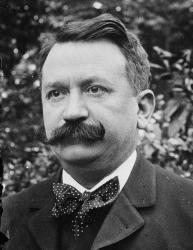
Dominique de Villepin
 France
Biography of Dominique de Villepin
Dominique de Villepin was born on November 14th, 1953 in Rabat, the capital of Morocco. He comes from a French political and diplomatic family, with his father Xavier de Villepin being a knight of the Legion of Honour and a noble French aristocrat. During Dominique's birth, his father was working in Morocco, which was a French protectorate at the time. Later, Xavier de Villepin became a diplomat in Venezuela, where Dominique also lived as a child, and later in the United States.

Dominique de Villepin's political views were influenced by his aristocratic, highly educated, and cultural family background, as well as his father's affiliation with the Gaullist party and his admiration for the late General de Gaulle's policies. However, he was also influenced by left-wing ideas that were popular among the youth of the French aristocracy.

At the age of 15, while studying at a French college in Caracas, Venezuela, Dominique de Villepin was the only student in his school to go on strike in solidarity with the revolutionary students in Paris in May 1968.

After moving to France, de Villepin completed his education in Toulouse and enrolled in the Institute of Political Studies, one of the most prestigious political science universities in the country. He then completed his education at the National School of Administration, an ideological stronghold of Gaullists, created in 1945 by General de Gaulle himself to train the new generation of top-level civil servants in France.

De Villepin joined the Gaullist party "Rally for the Republic" in 1977 and began his diplomatic career as a junior officer on the aircraft carrier "Clemenceau," the largest warship in France's navy. He later served in various positions in French embassies, including the United States and India. In 1986 and 1988, his first collections of poetry were published.

Returning to France in 1993, de Villepin became the secretary-general of the Ministry of Foreign Affairs under the leadership of Alain Juppé in the government of Édouard Balladur. In May 1995, Jacques Chirac appointed de Villepin as the Secretary-General of the Élysée Palace, making him the head of the presidential administration. He held this key position for seven years, and Chirac considered him as his adopted son.
In 2002, de Villepin was appointed as the Minister of Foreign Affairs by re-elected President Jacques Chirac. As the Minister of Foreign Affairs, he openly opposed the U.S.-led war in Iraq, which earned him applause from representatives of all countries at the United Nations. He also had a strong anti-American stance during his tenure.
In 2004, de Villepin was appointed as the Minister of the Interior, the second most important position in the French government, by Jacques Chirac. Although he was a rival of Nicolas Sarkozy within the party, he continued Sarkozy's policies in his role as the Minister of the Interior.
In May 2005, after the rejection of the European Constitution in a referendum and the resignation of Jean-Pierre Raffarin, de Villepin was appointed as the Prime Minister of France by Jacques Chirac. In his cabinet, Nicolas Sarkozy became the Minister of the Interior. De Villepin, who had never held any elected positions, served as a career politician and functionary in the French government.
Aside from politics, de Villepin is a prolific writer and has published several books, including "The Hundred Days of Napoleon Bonaparte, or the Spirit of Self-Denial" and "The Scream of the Gargoyle." He is also passionate about marathon running.
Dominique de Villepin is married and has three children: a son named Arthur, and two daughters named Maria and Victoria.