Dorothy Parker
 USA
USA- Biography of Dorothy Parker
- Early Life and Education
- The Algonquin Round Table
- Hollywood and Later Life
Biography of Dorothy Parker
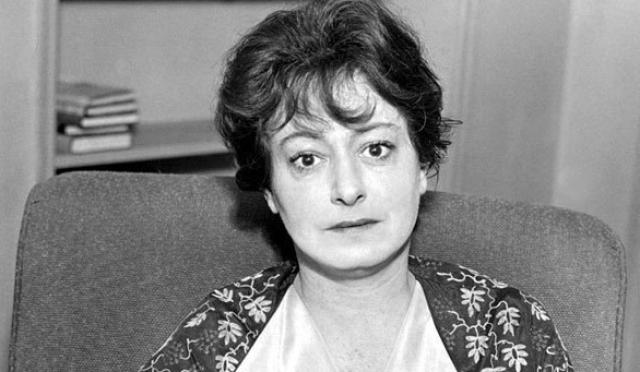
Dorothy Parker, an American writer, was born with a certain skepticism towards her own talent. However, according to her contemporaries, Parker's modesty was unwarranted as she was one of the most famous literary figures of her time. While she may not have been considered a "serious" writer, Parker excelled in the satirical genre, creating true masterpieces.
Early Life and Education
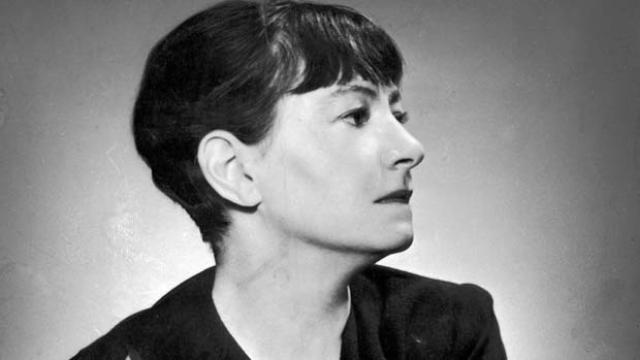
Dorothy Rothschild was born into the family of Jacob Henry Rothschild and Eliza Annie Rothschild in Long Branch, New Jersey. Her mother was of Scottish descent, while her father had German-Jewish origins. At the age of five, Dorothy lost her mother in 1898. In 1900, her father remarried Eleanor Francis Lewis. Dorothy despised her father and stepmother, often stating that her father would frequently physically abuse her. Despite her father being Jewish and her stepmother being Protestant, Dorothy attended a Roman Catholic school.
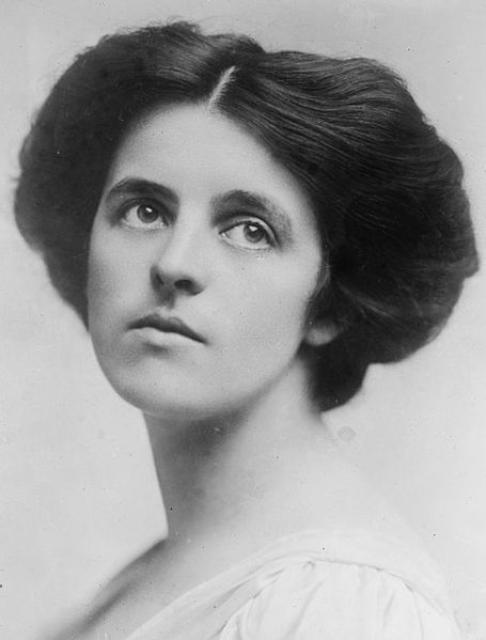
In 1903, Dorothy's stepmother passed away, and in 1913, at the age of 20, she lost her father. After completing school, Dorothy earned a living by playing the piano at a dance school. Meanwhile, she worked on her first poems. In 1914, she sold her first work to Vanity Fair and a few months later, she became an assistant editor at Vogue. After two years, she moved to a full-time position at Vanity Fair.
The Algonquin Round Table
In 1917, Dorothy met stockbroker Edwin Pond Parker II, and they married the same year. Unfortunately, Parker had to leave for World War I shortly after their marriage. Her work at Vanity Fair greatly contributed to her success. Starting as a theater critic, she became a deputy for P. G. Wodehouse in 1918. During her time at the magazine, Dorothy met and became friends with Robert Benchley and Robert Sherwood. The three of them started having lunch together at the Algonquin Hotel, laying the foundation for the famous Algonquin Round Table. Franklin Pierce Adams and Alexander Woollcott were also part of this group.
Some of Parker's sharp remarks and poems were published in various publications, including Adams' column, which further helped her gain national recognition. However, her excessive wit cost her a place at Vanity Fair in 1920, as she started offending powerful individuals. In protest, both Benchley and Sherwood left the magazine with her. In 1925, Harold Ross founded The New Yorker, and Parker and Benchley were part of the editorial board. Her first work was published in the second issue of the magazine. Parker became known for her short humorous poems, many of which focused on her numerous and unsuccessful love affairs. The next 15 years were the most productive period in her life and career. In the 1920s alone, she published over 300 poems in several prominent national publications. Parker published her first poetry collection in 1926, which received positive reviews and sold 47,000 copies. She published two more poetry collections and two collections of short stories. Parker co-wrote the play "Close Harmony" with Elmer Rice, which had a short run on Broadway but was later re-launched under a different title.
Hollywood and Later Life
In 1934, Parker married actor Alan Campbell, who, like Dorothy, was of Jewish and Scottish descent. The couple moved to Hollywood and signed a 10-week contract with Paramount Pictures. Starting with a payment of around $250-$1000 per week, they quickly rose to earning between $2000-$5000 as freelance contributors. Together, Parker and Campbell worked on more than 15 films.
Their screenplay for the 1937 film "A Star is Born," co-written with Robert Carson, earned Parker an Oscar nomination. She received a second nomination in 1947. During World War II, Parker, along with Alexander Woollcott, worked on an anthology of her own works, which were distributed to soldiers abroad. The collection was part of the "Portable" project and printed alongside the Bible and Shakespeare's works.
Parker also engaged in social and political activities, playing a key role in the Hollywood Anti-Nazi League. It was believed, perhaps not without reason, that the league collaborated with communists, which was ironic considering the number of wealthy donors supporting its cause.
Dorothy's marriage with Alan Campbell was not particularly stable. She struggled with alcoholism, and Campbell, rumored to be bisexual, was unfaithful. They divorced in 1947 but remarried in 1950. From 1957 to 1962, Parker worked on reviews for Esquire, although her talent had diminished considerably. After Campbell's death from an overdose in 1963, Parker returned to New York, where she lived at the Volney Hotel. Towards the end of her life, she began to doubt the talent of the members of the Algonquin Round Table, comparing them unfavorably to true literary giants of the time.
Dorothy Parker died of a heart attack on June 7, 1967. In her will, she bequeathed her estate to Dr. Martin Luther King Jr., which later passed on to the National Association for the Advancement of Colored People after his death.