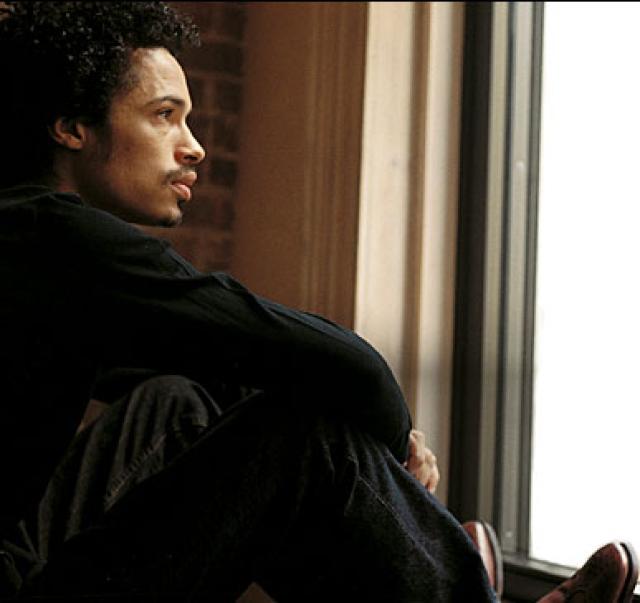
Eagle Eye Cherry
 Sweden
- Eagle Eye Cherry: The Rise of a Global Musical Phenom
- A Modest Debut with Big Ambitions
- Early Life and Musical Roots
- The Rise of Eagle Eye Cherry
- A Whirlwind of Success
- A Poetic Title, a Starry Collaboration
- A Hit-Filled Sophomore Album
- A Puzzling Album Title
- Creative Collaborations
- Staying Grounded
- Nigel Williamson. Translation provided by Vyacheslav POLYGA.
Eagle Eye Cherry: The Rise of a Global Musical Phenom
After the release of his debut album, Eagle Eye Cherry outlined his personal philosophy for navigating the shark-infested waters of pop music: "Don't take it too seriously. Don't take it too fast. And remember that making music is not about having different sides to your life or looking cool. We'll see if I can stick to that."
A Modest Debut with Big Ambitions
Two decades ago, Eagle Eye Cherry had modest ambitions for his debut album. "All I hoped for was that the record would sell well enough for me to do another one," he once said. Having sold over 4 million copies worldwide, he has indeed done more than just one other. The album, "Desireless," catapulted him to the ranks of modern songwriting greats.
Early Life and Musical Roots
It was an extraordinary few years for Eagle Eye, who released his debut album at the relatively mature age of 26. Yet, it now seems as if he were destined for a life in music. Born in Sweden in 1971, his father, who gave him his name, was legendary jazz trumpeter Don Cherry. "My father was on tour when I was born. He came home and I was asleep. I woke up and opened one eye and looked at him, and that's when he came up with my name."
Growing up, he and his sister, Neneh Cherry, spent months on the road with their father, becoming enamored with the tour bus lifestyle and the artistry of musicians. Their home base was a large house in the rural south of Sweden, which Eagle Eye describes as "a wonderful place – dirt roads and lakes." But at age 12, he was thrust into a very different environment when he was sent to boarding school in Brooklyn, New York. After high school, he worked as both an actor and a drummer before returning to Sweden in 1996 to pursue a music career.
The Rise of Eagle Eye Cherry
"The songs I was writing seemed really good to me," he recalls. "But the music business is so crazy, and I wasn't sure if it was for me. I'd seen what it can do to people and how it can really eat you up. Sweden seemed like more untrodden ground to start out in. I thought if it works here, then maybe I'd have the courage to go international. So that's how I decided to make a record."
His gamble paid off handsomely. While Eagle Eye's own expectations for the album may have been modest, critics had no doubts that they were witnessing the arrival of a major new talent. "There are those whose first albums are so perfectly realized that you know – from the moment you hear the first song on side one – that they're going to be wonderful," raved Uncut. Boosted by the infectious charm of his signature single, "Save Tonight," Eagle Eye's debut album, "Desireless," went platinum in Europe, the UK, and America.
A Whirlwind of Success
The success of the album had him on the road almost constantly for two years, during which time he performed nearly 300 concerts. "It was a crazy couple of years, but it would have been crazy to stop. It was so intense. I'd seen it when Neneh did it, but nothing prepares you for when you're in the middle of the hurricane." One of the high points of that whirlwind for Eagle Eye was his appearance on "Top of the Pops," one of the world's most prestigious music television shows: "It's so surreal, being on 'Top of the Pops,' because I'd been watching it for years."
A Poetic Title, a Starry Collaboration
As Eagle Eye emerged from the tour, it was time to write a follow-up album. He intended to pick up where he left off on his debut and recorded half a dozen tracks at Stockholm's Decibel Studios with Adam Kviman, who had co-produced his first album. However, another name entered the frame. "This guy with a beard came up to me at the Grammys and said he liked my first record," Eagle Eye recalls. It was none other than Rick Rubin, the legendary founder of Def Jam and producer of such luminaries as the Red Hot Chilli Peppers, The Cult, Beastie Boys, Public Enemy, and Johnny Cash.
"You've made your first record on a small budget, and it's a success. The temptation to get one of these big producers is overwhelming. But it's important to know what you want. If I was going to work with somebody like that, I knew it had to be Rick Rubin. I like his approach and the fact that he likes to record live," says Eagle Eye.
In October 1999, with six songs in the can, Eagle Eye paused his plans and headed for Brazil. "I never thought I'd hear myself saying the words, 'Hi, Rio,'" he says. From Rio, he made a stop in New York to meet with Rubin. The only problem was that the relentless cycle of touring and promotion had left him no time for songwriting. "I didn't have a melody, so Rick was getting a little nervous because the studio was booked."
Eagle Eye promptly rented a loft in New York and began writing with Chris Watkins, aka Preacher Boy. They then headed straight into the Magic Shop studio with Rubin and recorded six tracks in eight days – "Are You Still Having Fun," the bluesy "Promises Made," "One Good Reason," "The Long Way Around" (a duet with sister Neneh), "She Didn't Believe," and "Shades of Grey." "I didn't want to stop and think about it too much. I just wanted to do it. Just get it done in one go," says Eagle Eye. "I'm not into those high-tech Starship Enterprise studios. I like the fun of recording old-school analog."
Back in Sweden, the album was completed at Decibel Studios, where his father, Don Cherry, had recorded an album in 1972.
A Hit-Filled Sophomore Album
"Living in the Present Future" sounds like an album bursting at the seams with hits. "Been Here Once Before" is a mid-tempo charmer with a catchy chorus. "Are You Still Having Fun" features a driving beat that Eagle Eye had never attempted before. "One Good Reason" is an acoustic guitar and harmonica-led blues, while the string-laden "Promises Made" has a melody so sweet that Donovan would be proud to call it his own. The upbeat "Falling in Love" and the funky "Die Happy" both pack a punch, while "Days of Boredom" slowly builds from a gentle murmur to an anthemic crescendo. Then there's "The Long Way Around," the long-awaited duet with his elder sister, Neneh. "She's the greatest, coolest person," Eagle Eye says proudly. "I've always wanted to do a record with her, so hopefully now everyone will stop asking when I'm going to."
A Puzzling Album Title
The album's title may cause some head-scratching, so Eagle Eye helpfully explains: "I remember as a kid, I used to think about what it would be like in the future, in the new millennium. And then I realized we're already in the future, what with cash machines and mobile phones and all this other crazy stuff you could never have imagined. So I wrote a song about it, called 'Living in the Present Future.'" Then, just to add to the confusion, he didn't include the song on the album. "But I still like the title."
Creative Collaborations
Amid the whirlwind of his own career, Eagle Eye has somehow found time for collaborations with artists from across the musical spectrum. In addition to his contribution to Carlos Santana's multiple Grammy Award-winning album "Supernatural," Eagle Eye also wrote a song for the forthcoming Dust Brothers album. But perhaps his most striking collaboration is with Maxim of techno supergroup The Prodigy. Says Eagle Eye: "Maxim sent me this fantastic track that he'd made and gave me the go-ahead to do whatever I wanted with it. I wrote and recorded some lyrics and sent them back to him, so we never even met in the studio. It turned out really well, and he ended up doing his own remix of 'Are You Still Having Fun.'"
Staying Grounded
After the release of his first album, Eagle Eye outlined his personal philosophy for navigating the shark-infested waters of pop music: "Don't take it too seriously. Don't take it too fast. And remember that making music is not about having different sides to your life or looking cool. We'll see if I can stick to that."
So what happened? He laughs. "Well, I definitely do have different sides to my life. I don't know how that's going to pan out. But I'm surprised that I still feel like a regular guy."


