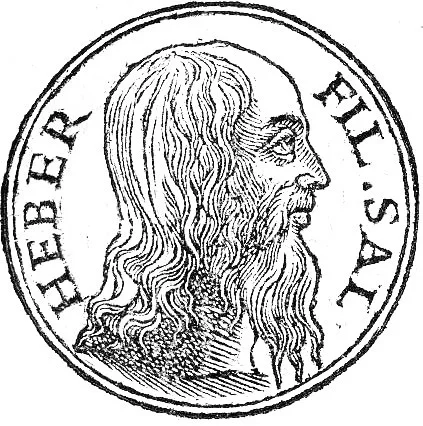
Eber
- A name in the generations of Shem
- Peleg, Joktan and the divided line
- A name associated with the Hebrews
- Legacy in biblical tradition
Eber occupies a brief but important place in the biblical family tree between Noah and Abraham. He is named as a descendant of Shem and as the father of Peleg and Joktan, whose lines connect the “Table of Nations” in Genesis with the later story of Israel’s ancestors. Unlike many figures in the biblical narratives, Eber has no extended story of his own; his significance comes from the genealogy that places him at a key point in the chain.
A name in the generations of Shem
In Genesis, Eber is the son of Shelah and a descendant of Arpachshad, one of Shem’s sons. The genealogy in Genesis 10 identifies Shem as the ancestor of the “sons of Eber,” a phrase that gives Eber unusual prominence within the chapter’s account of peoples and lineages. Later biblical lists, including those in 1 Chronicles and Luke, also preserve his name.
The biblical text does not give a biography of Eber in the modern sense. He appears through family relationships and generational links, so details about his personality, home or historical life are not supplied by the sources.
Peleg, Joktan and the divided line
Genesis names Eber’s two sons as Peleg and Joktan. It explains Peleg’s name with the note that “in his days the earth was divided,” a phrase that has been interpreted in different ways. The text does not spell out exactly what kind of division it means.
The two sons lead the genealogy in different directions. Genesis 10 lists many descendants of Joktan, while Genesis 11 follows the line of Peleg through Reu, Serug, Nahor and Terah to Abram, later known as Abraham. That family line makes Eber a bridge between the universal account of peoples after the flood and the biblical narrative focused on Abraham.
A name associated with the Hebrews
Eber’s name has often been connected with the Hebrew term “Hebrew,” and the biblical text’s reference to the “sons of Eber” has contributed to that association. The precise linguistic relationship is debated, however, and the genealogical label should not be treated as a settled historical explanation of the word’s origin.
Legacy in biblical tradition
Eber’s role is small in narrative terms but substantial in genealogical structure. His place in Genesis helps organize the ancestry of peoples and introduces the lineage that leads toward Abraham. Readers encounter him not through personal deeds, but through the generations his name helps connect—a quiet figure at an important junction in the biblical account.