Eddi Rozner
 Germany
Biography of Eddie Rosner
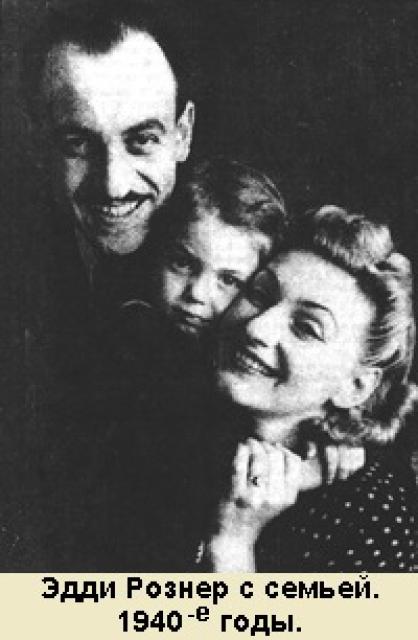
Eddie Rosner, born Adolf Ignatievich Rosner on May 26, 1910, was a jazz musician. He was born to Ignatius Rosner, a shoemaker by trade, and Rosa Rosner (nee Lampel), a homemaker. His parents, Polish subjects of Jewish nationality, lived in Berlin, Germany, on Georgenkircherstrasse, house number 5 (Alexanderplatz center). They had six children, four daughters and two sons, all born in Berlin.
Rosner's autobiography begins with his birth and goes on to detail his experiences during World War II. He fled from the Nazis in Germany to Poland and then to the Soviet Union. Eventually, he ended up in Magadan, where he wrote his autobiography in October 1953.
At the age of four, Rosner developed a passion for music. In 1916, at six years old, he was accepted into the Stern Conservatory of Music in Berlin, specializing in violin. In 1920, he graduated from the conservatory with excellent grades in violin and continued his musical education at the Higher School of Music in Berlin on Kantstrasse.
During this time, Adolf Rosner switched from violin to trumpet, which would shape his entire career. The violin, the queen of the symphony orchestra, gave way to the trumpet, the king of jazz. Rosner initially performed in Marek Weber's orchestra and then joined Stefan Weyntraub's jazz band, which had a more prominent jazz direction than Weber's orchestra. Vladimir Vinogradov, a collector and journalist, described this period of Rosner's life: "In the 1930s, this orchestra made recordings and toured Western Europe. In addition, the Syncopators worked under contract on the transatlantic steamship New York, entertaining the passengers traveling between Hamburg and the American ports. Eddie Rosner corresponded with drummer Gene Krupa, and his idols became American trumpeters Roy Eldridge, Bunny Berigan, and Harry James. Alongside the Dutchman Louis de Freeze, Rosner was considered the best jazz trumpeter in Europe. Hitler's rise to power accelerated the musician's decision to leave Germany. He was even beaten by stormtroopers in a bar in central Berlin. During his tours in Switzerland, Rosner left Weyntraub and moved to Poland."
In Poland, Rosner, like Henryk Wars, managed to overcome the prevailing style of tango orchestras and create magnificent examples of swing jazz, which were recorded by the Columbia company during the orchestra's tours in Paris in 1938. However, on September 1, 1939, World War II began, and Rosner and his group of musicians were forced to flee to the territory of Western Belarus, which had just become part of the Soviet Union. They were warmly received by the Soviet border authorities and sent to Bialystok when they learned they were artists. Rosner organized the Bialystok Jazz Orchestra, which soon became the State Jazz Orchestra of the BSSR. They went on tours in Belarus and then in Leningrad. Musician Yuri Tseytlin remembered this period: "The first concerts of the BSSR jazz brought tremendous success. It was an unprecedented musical and entertainment spectacle. The good news about it spread like lightning, and when jazz finally appeared in Moscow, there was a frenzy to get tickets. The success of the BSSR jazz concerts was overwhelming." The first lineup of Rosner's orchestra did not last long. In late 1941, most of the musicians joined Anders' Polish Army, and Rosner had to reorganize his collective, including new performers from the no longer existing orchestras of Henryk Gold and Henryk Wars. The orchestra began recording albums.
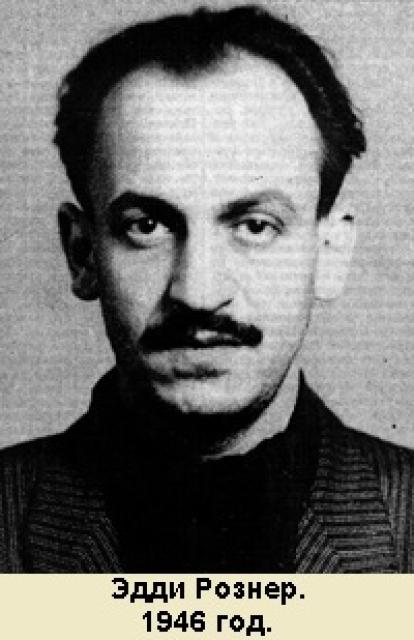
Among the hits recorded in 1945-1946 were popular compositions such as "Caravan," "Cowboy," "Mandolin, Guitar, and Bass," and "Boy-Paranek," featuring vocal performances by the Rosner orchestra singers. In the future, Eddie Rosner's collective recorded albums with Georgy Vinogradov and Georgy Abramov since the artistic council was not satisfied with the Polish accent of the orchestra's soloists. As a result of these creative contacts, beloved recordings were made, such as "Why," "Secret Island," "On the Glade," "This Isn't a Dream," "Serenade on the Donkey," and "In a Boat." The instrumental compositions, mostly written by Yuri Belzatsky and Eddie Rosner, were distinguished by excellent swing and Rosner's outstanding talent as a solo trumpeter. Among the instrumental compositions recorded by the collective on albums, special mention should be made of "St. Louis Blues," "1001 Tacts in Rhythm," "Rosita," and "Goodbye, Love." Everything was going well until August 18, 1946, when the newspaper "Izvestia" published an article by E. Grozheva titled "Vulgarity on the Stage." After this, Rosner decided to return to Poland, but he had to do so illegally, and on November 28, 1946, he was arrested by the Lvov branch of the NKGB. Rosner was imprisoned and received a 10-year sentence. He worked in the prison orchestra and remained in confinement until May 22, 1954. After Stalin's death, he was released. During his time in the Magadan camp, he wrote numerous petitions for a review of his case, but with no success. After his release, the tireless Rosner reorganized his orchestra, with only vocalist Pavel Hoffman and violinist Louis Markovich remaining from the previous lineup. The comedy film "Carnival Night" was then aired, featuring music by Rosner's orchestra. In the 1960s, he tried to create an orchestra with a jazz repertoire, but after the prison struggles and a car accident, he couldn't perform as brilliantly as before. During this time, the only record with Polish vocalist Katarzyna Bovera was made.
In 1972, Rosner emigrated to West Berlin, but he didn't have much time to live in his home country. On August 8, 1976, Eddie Rosner passed away. Maestro from Berlin. - "Independent Newspaper" from July 12, 1996.


