Edith Louisa Sitwell
 Great Britain
- Biography of Edith Louise Sitwell
- Early Career and Personal Life
- Later Years and Achievements
- Later Life and Legacy
Biography of Edith Louise Sitwell
Early Life and FamilyEdith Louise Sitwell was born on September 7, 1887, in Scarborough, North Yorkshire. She was the eldest child and only daughter of Sir George Sitwell, 4th Baronet of Renishaw Hall, an expert in genealogy and landscape design. Her mother, Lady Ida Emily Augusta Sitwell (née Denison), was the daughter of the Earl of Londesborough and a descendant of the Plantagenets. Both of her younger brothers also became notable writers. Edith had a tumultuous relationship with her eccentric and unsympathetic parents, particularly due to her father's decision to 'cure' her supposed scoliosis by encasing her in an iron brace. In her autobiography, she wrote that her parents were always strangers to her.
Early Career and Personal Life
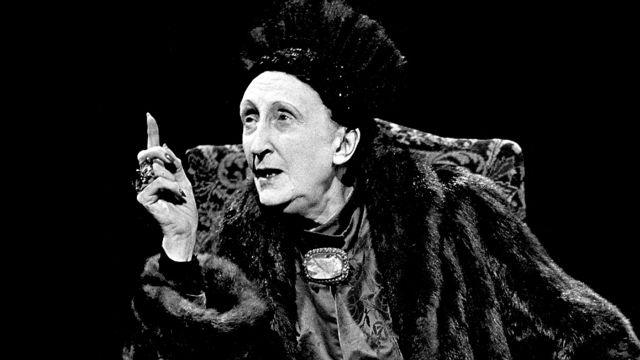
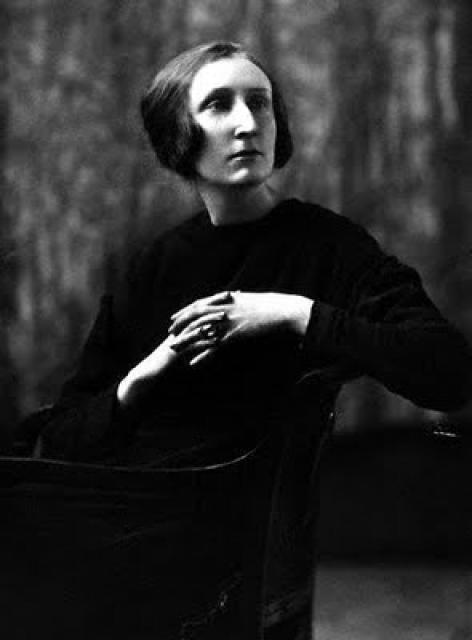
In 1914, at the age of 25, Edith moved into a small, shabby apartment in the Bayswater district of London, which she shared with her governess Helen Rootham. Throughout her life, Edith remained unmarried, but she developed a deep attachment to the Russian artist Pavel Tchelitchew, who was homosexual. Her home was always open to London's poetic circle, to whom she was consistently generous and kind. Edith published her own poetry continuously since 1913, with some of her works set to music. Known for her dramatic demeanor and exotic attire, which included velvet and brocade dresses, gold turbans, and numerous accessories, she was sometimes considered a poseur. However, her works were highly regarded for their solid technique, skill, and meticulous attention to detail.

Later Years and Achievements
During World War II, Sitwell returned from France and lived at Renishaw with her brother Osbert and his lover David Horner. She wrote by the light of oil lamps due to the lack of electricity and knitted for her friends serving in the military. Her war-time poems, including collections like "Street Songs" (1942), "The Song of the Cold" (1945), and "The Shadow of Cain" (1947), gained her renewed attention from readers. Her poem "Still Falls the Rain" about the London Blitz was set to music by Benjamin Britten and turned into "Canticle III: Still Falls the Rain". In 1943, her father passed away in Switzerland, leaving her with a meager inheritance.
Later Life and Legacy
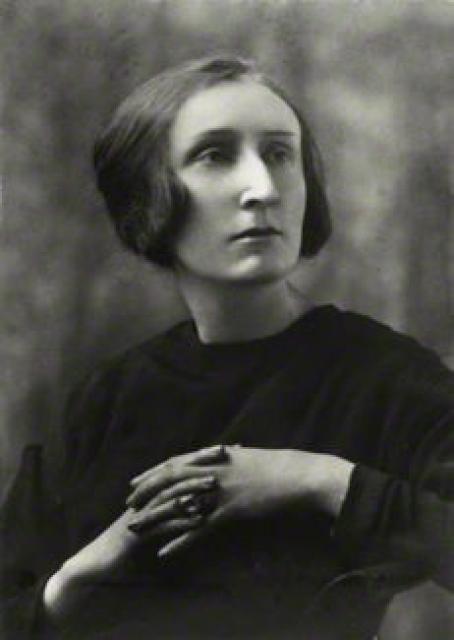
In 1948, Edith reunited with Tchelitchew, whom she had not seen since the pre-war era, but the reunion did not go well. In the same year, she traveled to the United States with her brothers, where she performed readings of her poetry. She was appointed Dame Commander of the Order of the British Empire (DBE) in 1954 and converted to Catholicism in August 1955, asking fellow writer Evelyn Waugh to be her godfather. Edith wrote two books about Queen Elizabeth I, "Fanfare for Elizabeth" (1946) and "The Queens and the Hive" (1962). Despite her claim that she wrote poetry for the soul and prose for money, both books were immensely successful, as were her works "English Eccentrics" (1933) and "Victoria of England" (1936). Throughout her life, she battled with Marfan syndrome and began using a wheelchair around 1957. Edith Sitwell passed away from a cerebral hemorrhage at St Thomas' Hospital in London on December 9, 1964, at the age of 77. Her papers are preserved at the University of Texas at Austin.