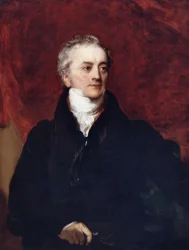
Edward Burnett Tylor
Edward Burnett Tylor helped establish anthropology as a field of systematic study in Britain. His work treated culture as a broad pattern of learned life, from belief and custom to art, law, and social organization. In Primitive Culture, published in 1871, he also advanced an influential theory of animism and a comparative account of cultural change. Many of his ideas shaped later research, while his evolutionary hierarchy of societies and reliance on secondhand reports are now regarded as major limitations of his approach.
Early life and the journey to Mexico
Tylor was born on 2 October 1832 in Camberwell, then in Surrey, into a Quaker family. He left school as a teenager and joined his family’s brass foundry. In 1855, signs of tuberculosis led him to travel abroad. His journey through the United States, Cuba, and Mexico awakened his interest in archaeology and the study of human societies.
The Mexican journey became the basis for his first book, Anahuac, or Mexico and the Mexicans, Ancient and Modern, published in 1861. Tylor’s health and independent means gave him time to read widely and pursue research outside the established university system. He married Anna Fox, also a Quaker, in 1858; their marriage lasted until his death, and they had no children.
Building a science of culture
Tylor’s first major scholarly work, Researches into the Early History of Mankind and the Development of Civilization, appeared in 1865. His best-known book followed in 1871: Primitive Culture, a two-volume study of religion, mythology, art, custom, and social life. The book offered an expansive definition of culture as the knowledge, beliefs, arts, morals, laws, customs, and other learned habits people acquire as members of society. That broad conception became foundational to anthropology.
Tylor also made animism central to his theory of religion. He argued that beliefs in souls and spirits represented an early form of religious thought and could be traced through dreams, death, and other human experiences. He used comparisons across societies to look for patterns of development, and his idea of “survivals” described customs or beliefs that persisted after the conditions that had produced them changed.
His framework reflected the nineteenth-century belief that cultures moved through a common sequence from simpler to more complex forms. Tylor placed European society at the top of a hierarchy and classified other peoples by how closely they seemed to match it. Modern anthropology rejects that ranking as ethnocentric and recognizes that cultures cannot be placed on a single scale of progress. Tylor was also largely an “armchair” scholar: although travel had first sparked his interest, much of his later evidence came from accounts written by missionaries, explorers, and other observers rather than sustained fieldwork of his own.
Oxford and public standing
Tylor’s growing reputation helped bring anthropology into Oxford’s academic life. He became Keeper of the University Museum in 1883 and Reader in Anthropology in 1884. In 1896, he became Oxford’s first professor of anthropology. His lectures attracted students as well as listeners from outside the university, and he helped establish a place for the new discipline within higher education.
He published Anthropology: An Introduction to the Study of Man and Civilization in 1881, making the subject accessible to a wider readership. Tylor was elected a Fellow of the Royal Society in 1871 and received an honorary doctorate from Oxford in 1875. He resigned his museum post in 1902, retired from his professorship in 1909, and was knighted in 1912.
Legacy
Tylor died in 1917. He is often described as a founder of British anthropology because he helped define its subject matter and promoted comparative, evidence-based study of human life. His broad concept of culture remains influential, even as later scholars have challenged his hierarchy of societies, his account of religious origins, and his dependence on secondhand sources. His career marks both the ambition of early anthropology and the limits imposed by the assumptions of its time.