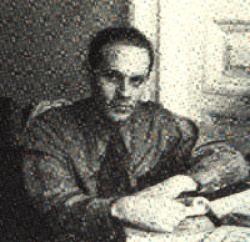
Edward Dembowski
 Poland
- Edward Dembowski: Polish Philosopher and Revolutionary
- Early Life and Education
- Philosophical and Literary Contributions
- Political Activism
- Participation in the Kraków Uprising
- Legacy and Burial Place
Edward Dembowski: Polish Philosopher and Revolutionary
Edward Dembowski (1802-1846) was a prominent Polish philosopher, writer, and revolutionary who played a significant role in the Kraków Uprising of 1846.
Early Life and Education
Born into a noble family in Warsaw, Dembowski received a classical education and studied philosophy in Berlin and Heidelberg. His exposure to the revolutionary ideas of the time, particularly Hegelianism, had a profound impact on his intellectual development.
Philosophical and Literary Contributions
Returning to Poland, Dembowski became known for his radical writings, in which he criticized the political and intellectual stagnation of his time. As an editor of the journal "Przegląd naukowy" ("Scientific Review"), he advocated for a critical and progressive approach to Polish society and culture. In his seminal work, "Piśmiennictwo polskie" ("Polish Literature"), published in 1845, he denounced conservative writers and praised only those who sought to provoke social and political change.
Political Activism
Dembowski's revolutionary fervor extended beyond his philosophical and literary pursuits. He became a leading figure in the Polish National Democratic Party and played a central role in organizing the Kraków Uprising of 1846, an unsuccessful attempt to liberate Poland from Austrian rule.
Participation in the Kraków Uprising
On February 21, 1846, Dembowski and other insurgents attacked the Austrian garrison in Kraków. The uprising was brutally suppressed, and Dembowski fell in battle.
Legacy and Burial Place
Edward Dembowski is remembered as a philosopher and writer who dared to challenge the established order and inspire Poles to fight for their freedom. He is buried in the Old Podgórze Cemetery in Kraków, where his grave serves as a symbol of Polish patriotism and the sacrifices made during the uprising.