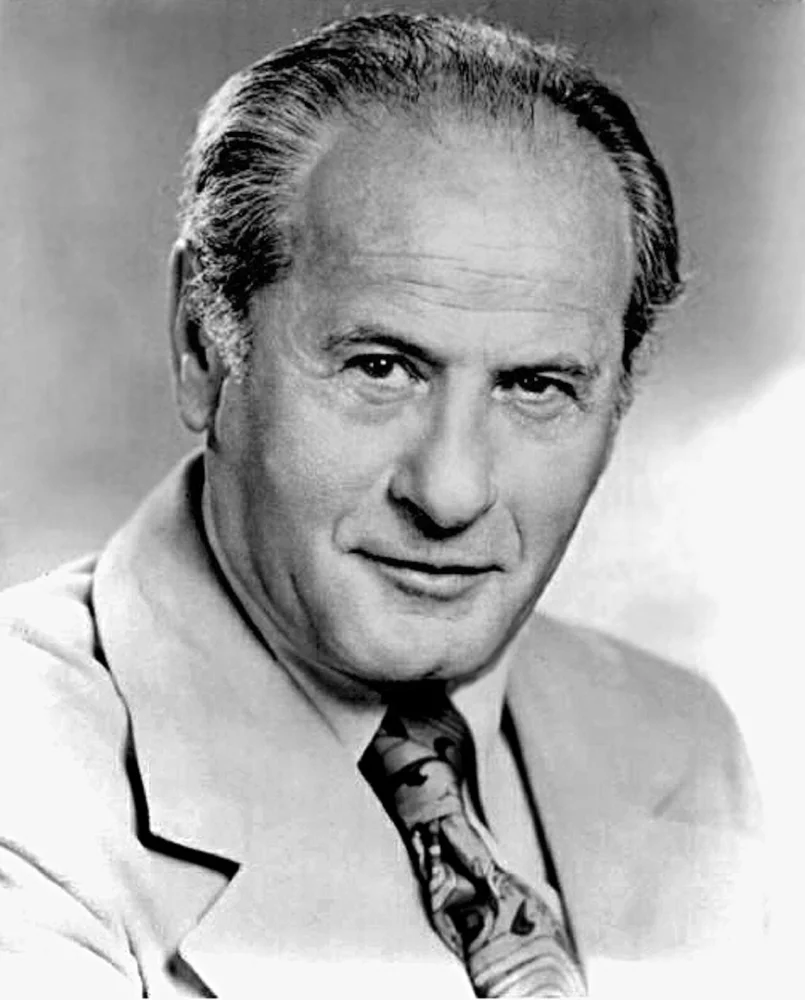
Eli Wallach
Eli Wallach spent more than six decades turning supporting roles into unforgettable performances. He could make a character funny, dangerous, tender, or all three at once, as he did in films such as *The Magnificent Seven* and *The Good, the Bad and the Ugly*. A mainstay of stage, film, and television, he built a career on precision and range rather than a single screen persona.
Early Life and Training
Wallach was born on December 7, 1915, in Brooklyn, New York, to Polish Jewish immigrant parents. He grew up in a neighborhood where his family’s small candy store was part of everyday life. After studying at the University of Texas at Austin, he returned to New York and pursued acting, training at the Neighborhood Playhouse and with the influential director Erwin Piscator.
During the Second World War, Wallach served in the United States Army Medical Corps. After the war, he continued his stage training and became a founding member of the Actors Studio, where he worked within the emerging tradition of Method acting. He met actress Anne Jackson in New York; they married in 1948 and became artistic partners as well as life partners.
Broadway and Hollywood
Wallach first made his name on stage. His performance in Tennessee Williams’s *The Rose Tattoo* won him the 1951 Tony Award for Best Featured Actor in a Play. He also appeared in works by Williams, Arthur Miller, and other major American playwrights, often alongside Jackson.
His film debut came in Elia Kazan’s *Baby Doll* (1956), where Wallach played the intense Silva Vacarro. He became widely known as the bandit Calvera in *The Magnificent Seven* (1960), then delivered one of his most celebrated performances as Tuco, the volatile outlaw in Sergio Leone’s *The Good, the Bad and the Ugly* (1966). His role as Guido in John Huston’s *The Misfits* (1961), alongside Clark Gable and Marilyn Monroe, showed another side of his ability to balance comic energy with vulnerability.
Wallach returned often to the stage and appeared in scores of films and television productions. He won an Emmy for the television drama *The Poppy Is Also a Flower* and continued working well into his later years, with appearances in *The Godfather Part III*, *The Holiday*, and other films introducing him to new audiences.
Personal Life and Recognition
Wallach and Jackson raised three children and shared a long creative life in New York theater and beyond. His memoir, *The Good, the Bad, and Me*, recounted the stories and encounters behind a career that moved between Broadway, studio films, television, and independent projects.
In 2010, the Academy of Motion Picture Arts and Sciences presented Wallach with an honorary award recognizing his lifetime of work. He was also awarded the National Medal of Arts. These honors celebrated an actor whose screen time could be brief yet leave a lasting impression.
Legacy
Wallach died in New York on June 24, 2014, at the age of 98. His performances remain vivid because he played characters as individuals, not as simple types. Even when cast as an outlaw or antagonist, he brought humor, intelligence, and unexpected humanity to the role.
His career stands as a testament to the craft of character acting. Wallach moved easily between stage and screen, classical drama and popular entertainment, building a body of work that remains rewarding to revisit.