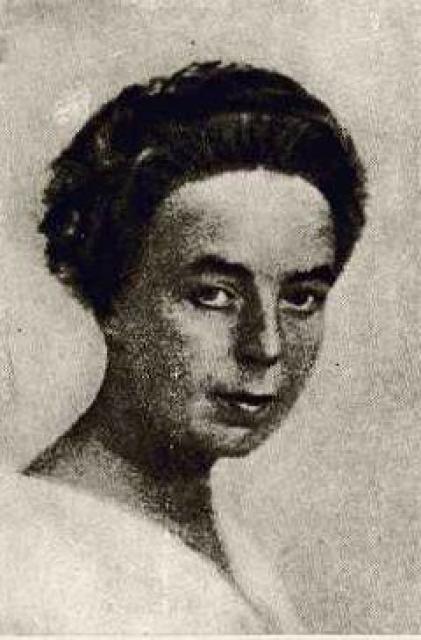
Elizabet Shragnuller
 Germany
Elizabeth Schragmüller: An Outstanding Case in the History of Espionage
Elizabeth Schragmüller, also known as "Mademoiselle Doctor," was born in Münster in 1888. She came from a distinguished family, with her father being from a Westphalian officer family and her mother from an ancient Hanoverian noble lineage. Elizabeth studied political science at the universities of Berlin, Lausanne, and Freiburg, which was a rarity for women at that time. In 1913, she graduated with honors.
When the war began, Elizabeth attempted to find work as a military censor in occupied Brussels, as she was fluent in French. In her memoirs, she wrote, "I realized long ago that I was not taken seriously, so I decided to take them by storm, to persist until they finally issued me a pass to travel to Brussels. My father said that they would send me back home from there as soon as possible."
However, her father's pessimism did not deter Elizabeth. She traveled to Brussels and managed to secure a meeting with General Field Marshal Baron von der Goltz, who was acting as the military governor. She made a good impression on the experienced officer, and he directed her to the VII sector of the commandant's office, responsible for military security. Elizabeth's duties included screening intercepted letters from Belgian civilians to their relatives who were fighting against the Germans. Soon, her ability to analyze intercepted correspondence earned the approval of General Bezeler from the corps headquarters, and she was officially transferred to the Brussels center of military intelligence.
Elizabeth recalled, "I immediately felt that I had joined a unit imbued with a completely different spirit and much more involved in the great events of the world war than the VII sector, which dealt mainly with local problems of the Brussels garrison. But at first, I hesitated whether to accept this tempting offer. However, when the head of the VII sector also approved my new assignment, I left there. At that time, I did not yet suspect that military intelligence was directly subordinate to the Supreme Command of the Army and was one of its most advanced positions. I did not know how important the field of activity entrusted to this center was... At first, I thought that military intelligence was about providing information about the war to the public and maintaining communication between the front and the homeland. I couldn't even imagine that the function of intelligence was to systematically collect information about the enemy."
Before the fall of Antwerp, Major Nikolaï, the head of the III-b department of the General Staff, responsible for all higher-level intelligence services, became acquainted with the new employee. He believed that a woman had no place in intelligence. Elizabeth Schragmüller said, "It took incredible efforts to convince him to allow me to stay in the III-b mobile unit and move to Lille with the head of the military intelligence center in Brussels." Her role was to instruct newly recruited agents, ensure communication channels, verify incoming information, and compile and send reports to the III-b department "West." Elizabeth quickly mastered the secrets of the spy craft.
"Until the beginning of 1915, I adapted to my new responsibilities. Then, at the order of the head of the 1P-Ê department, I was entrusted with the leadership of the intelligence sector against France, which was then based in Antwerp. I worked in this sector until the end of the war. The brightest minds of the General Staff, as well as the leaders of various departments of the high command of the army, taught me the spy craft. But war was my main teacher," Elizabeth Schragmüller said.
The tasks of the Antwerp intelligence center included monitoring the movement of enemy troops, studying their organization, assessing the strength of enemy reserves in the rear. In addition, the army command was interested in what reserves the enemy brought in from the sea, along which routes, and by what means of transportation. The Antwerp center also kept a constant watch on military-industrial enterprises and the enemy's development of new weapons.
This required expanding the agent network, particularly through the recruitment of individuals trusted by enemy military commanders and government officials, as well as smaller-scale spies for local intelligence. Mobile agents who could be swiftly dispatched to the necessary locations and agents permanently residing in the most important areas were also utilized. Soldiers in the rear who questioned their comrades returning from the front were also used as agents. Elizabeth Schragmüller said, "One of the most challenging tasks of intelligence was not only establishing new contacts, but also establishing reliable ways and means of transmitting information. Each case required its own approach. Mobile agents had to be provided with passports. The intelligence service had to know all the details of the enemy's rules and regulations regarding communication routes, passenger movement, and document processing. They needed to know the practice of inspection at specific border points. For any agent's trip, reasons subject to scrutiny had to be devised."
When security measures from the Entente's counterintelligence became so strict that passenger movement within the country, especially in strategically important areas, was restricted, it was necessary to almost completely abandon traveling agents. They shifted their focus to sedentary agents. However, working with them required organizing reliable channels of information transmission. Telegrams were subject to censorship, and if they raised even the slightest suspicion, they were not sent at all, but the gathered information had to be transmitted as soon as possible. The conditional text used in telegram composition depended on a specially developed code corresponding to the profession of each individual agent. Fictitious addresses were used for communication through distant countries to divert the enemy counterintelligence's attention from the content of the telegrams and their senders. For example, once the intelligence center received a telegram about the arrival of large contingents from England to France 36 hours after the corresponding telegram was sent by an agent in Le Havre! On another occasion, they received the genuine official French diagram of the clustering of shells during the first artillery shelling of Paris by long-range German guns only three days after the shelling began. Each major agent was assigned a person through whom the communication was supported.
Naturally, the enemy became aware of the activities of the intelligence center in Antwerp and attempted to neutralize it. Sabotage divers were given the task of liquidating this center, especially before major operations. Schragmüller said, "The enemy achieved a result contrary to what he intended. Sometimes, he even provided us with additional evidence confirming his plans, which we already suspected based on information from other sources."
Elizabeth Schragmüller suggested recruiting French deserters who fled to Switzerland. She said, "After the training of the first two deserters recruited by our agent A. F. 89 in Geneva was completed, we decided to send them back to France under the identities A. F. 93 and A. F. 94, using the same route they escaped from France to Switzerland. At the border, they changed into hidden uniforms and, under the guise of vacationers returning to their military units, went to one of the major railway stations located in the rear (the French called them 'adjustment stations'). The IDs I obtained for them belonged to two different military units, and we did not know their current locations at the time. I instructed both deserters to find out the current deployment of their units at the adjustment station commandant's office and, if possible, to linger there without attracting attention, talking to vacationers who had just returned from the front and gathering any valuable information from them. They were also required to interact with vacationers as much as possible during their journey. Additionally, they were obliged to recruit deserters from their units on French territory, just as Agent A. F. 89 did in Switzerland. I offered a reward of 500 francs for each deserter they managed to persuade to come to us. However, I made it clear that this amount would only be paid if the information provided by the recruited deserters was accurate and reflected the situation no more than eight days ago. A. F. 93 and A. F. 94 were given the same careful training as other agents. Since they were military personnel, their training was much simpler than that of many civilian agents. Moreover, there was no need to instruct deserters on using sympathetic ink, secret codes, etc., as they only had to provide oral reports. Both agents, accompanied by A. F. 89, crossed into Switzerland through smugglers' paths and then returned to France, but separately. There, they each started carrying out their assignments independently. After two or three weeks, they returned to Antwerp. I interrogated both of them immediately, again being accompanied by two people. This time, the interrogation yielded the desired results. Each of them managed to speak with about twenty vacationers from different units. They encountered many vacationers whose stories provided information about the deployment of certain divisions, which we had long been trying unsuccessfully to ascertain. Moreover, A. F. 93 and A. F. 94 brought three more deserters with them (new recruits by Agent A. F. 89). After receiving training, the newcomers were also tasked with interrogating vacationers and recruiting deserters."
One of the agents' tasks was to obtain leave documents and instructions for their completion. However, due to a failure on the part of a deserting agent or an increase in the number of missing leave forms, French counterintelligence began to suspect something was amiss. All previous leave formularies were confiscated, and new ones of different colors were introduced. Travel orders, for example, red, white, green, or yellow forms, were now valid only for specific areas. Additionally, all forms now bore a warning stating that anyone who falsified, appropriated, or misused these leave documents would face the death penalty.
Schragmüller said, "This meant that I needed to start all over again. I had to obtain new forms and instructions. The caution of enemy counterintelligence paralyzed recruitment and the sending of deserters for some time. It was only a month later that I finally managed to obtain the necessary formularies. This allowed us not only to resume recruiting deserters but also to significantly expand it. Among the new agents was an illiterate Marseille flower merchant. He had an extraordinary memory. Working alone, he went to France 15 times, which means he crossed the border 30 times without anyone's help. Once, he provided us with precise data on the deployment of 40 different units and divisions. Not once did a deserter give us false information in an attempt to mislead us. They faithfully worked for us, unlike the spying scum who, while in a neutral country, obtained information from second or third hand, and sometimes even bought it from the infamous news exchanges, then claimed that the information was obtained on enemy territory under extremely dangerous circumstances."
Deserting agents who operated in France usually entered (and returned) through neutral Switzerland. With some luck, uncontrolled border areas with mountain passes allowed them to infiltrate into France. However, since Switzerland was far from Antwerp, a considerable amount of valuable time passed before a deserting agent could return and deliver the gathered information. Therefore, in the spring of 1918, the head of the III-b department decided to relocate the Antwerp intelligence center closer to the Swiss border. Colonel Nikolaï chose Freiburg im Breisgau as the nearest major city connected by a direct railway line to Basel for the relocation.
After the war, Dr. Elizabeth Schragmüller left intelligence with the rank of Oberleutnant and the Iron Cross 1st Class. She returned to Berlin. The intense work during the war undermined her health, so she spent a lot of time in hospitals and sanatoriums. Elizabeth Schragmüller passed away on February 24, 1940, in Munich. Only a few of her closest acquaintances attended the funeral.