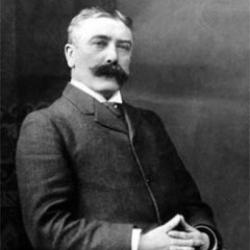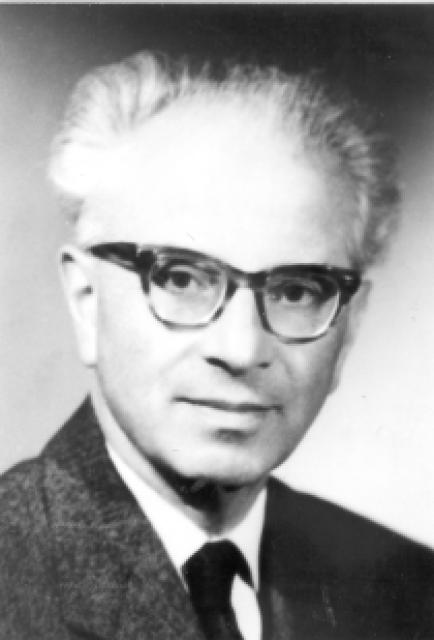
Emile Benveniste
 France
Emile Benveniste: A French Linguist
Emile Benveniste was a renowned French linguist who was born on March 27, 1902, in Aleppo, Syria. He studied at the Sorbonne and later at the Paris School of Advanced Studies under A. Meillet. In 1937, he became a professor at the College de France, taking over Meillet's chair. From 1959 until his death, Benveniste served as the secretary of the Paris Linguistic Society, of which he became a member in 1920. He was also an honorary member of several academies and scientific societies. Benveniste passed away in Paris on March 3, 1976.
Contributions to Linguistics
As an Indo-Europeanist, Benveniste aimed to synthesize the traditions of 19th-century classical science with the ideas of structuralism, seeking a systemic approach. He believed that no other linguistics, apart from structural linguistics, could exist by definition. He authored works on nominal word formation and root structure in Indo-European languages. Many of his studies focused on Iranian languages, Indo-Aryan and Hittite-Luwian languages. Benveniste is best known for his two-volume Dictionary of Indo-European Social Terms (Le vocabulaire des institutiones indo-européennes, 1970). In the field of general linguistics, he published relatively small works, mainly collected in the book Problems in General Linguistics (Problèmes de linguistique générale, 1966, Russian translation 1974). Rather than aiming to create a comprehensive linguistic theory, Benveniste limited himself to examining important specific issues such as language classification, the structure of relative clauses, subjectivity in language, and others.
Views and Ideas
Benveniste disagreed with several of Ferdinand de Saussure's positions, particularly the arbitrariness of the sign. He argued that arbitrariness only exists in terms of naming external reality, but the relationship between the two sides of a sign and between signs in a system is not arbitrary. While agreeing with glosssematists and descriptivists that linguistics should formulate its own concepts without borrowing from other sciences, Benveniste emphasized the psychological significance of fundamental linguistic concepts, including phonemes. He believed that it was necessary to study not only the linguistic form but also the linguistic function, stating that "Form takes on the character of structure precisely because all the components of the whole perform some function." These ideas align Benveniste with the Prague Linguistic Circle.
In his article "Categories of Thought and Categories of Language" (Catégories de pensée et catégories de langue, 1958), Benveniste emphasized that the linguistic form is an essential condition for the realization of thought. However, he rejected the notion that language is merely a form of thought and that there are some general categories of thinking independent of language, such as substance, quantity, and time. According to Benveniste, many of these categories, identified by Aristotle, reflect the structural peculiarities of ancient Greek language. The notions of time, for example, are connected to the existence of grammatical categories of tense in this language. Aristotelian logic is nothing more than a schematized Greek syntax, and so on. However, many of these categories are not exclusive to ancient Greek but are characteristic of Indo-European languages as a whole.