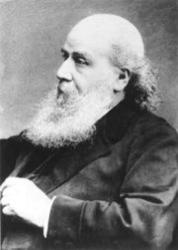
Emile Borel
 France
Biography of Émile Borel
Émile Borel, a French mathematician and politician, is one of the most renowned mathematicians of the 20th century. He served as the president of the Paris Academy of Sciences from 1934. Throughout his life, he published over 300 works, with numerous mathematical concepts and objects named after him in various branches of mathematics.

Early Life and Education
Émile Borel was born in the southern region of France, near Avignon. His father, Honoré Borel, was a Protestant pastor, and his mother, Émilie Théssé Solliers, was the daughter of a manufacturer. He was the youngest of three children in the family. Borel received his initial education from his father, who directed a Protestant school. Local residents marveled at the young child's abilities, stating that he had learned the basics of geometry at the age of three.
At the age of 11, Borel entered the Montauban High School, and at 17, he enrolled in the Collège Sainte-Barbe in Paris. At the Lycée Louis-le-Grand, he studied mechanics and geometry. After winning two prizes in competitions, he had the option to continue his education either at the École Normale Supérieure, a stronghold of academic research, or at the Polytechnic School, an institution known for producing successful industrialists. Borel chose science and entered the École Normale Supérieure.
Career and Contributions
Borel's early works focused on geometry under the influence of Gaston Darboux. In 1893, he appeared as a professor at the University of Lyon. Over the next three years, he produced 22 papers and a dissertation. In 1897, he became a professor at the École Normale Supérieure.
In 1901, Borel married Marguerite Appell, who later became a well-known writer under the pseudonym Camille Marbo. During World War II, Borel participated in the French Resistance. He was arrested by the Germans and thrown into the Frennes prison. After a month in the cold and damp cell, he was eventually released.
The eminent mathematician passed away at the age of 85 due to an injury sustained during a trip from Brazil. His nephew, Armand Borel, also became a renowned mathematician. In honor of Borel, a crater on the Moon is named after him. Alongside René Baire and Henri Lebesgue, he was one of the founders of measure theory and its applications in probability theory.
Main Contributions
Several significant mathematical results bear Borel's name, including the Borel–Lebesgue principle, Borel–Cantelli lemma, Borel paradox, Borel measure, Borel algebra, Borel–Carathéodory theorem, Heine–Borel theorem, Borel–Heine property, Borel sum, and Borel transformation.