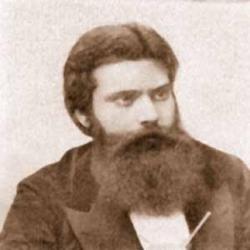
Emile Cartailhac
 France
- Émile Cartailhac: Pioneer in Prehistoric Archaeology
- Early Life and Research
- Anthropological Explorations
- Publications and Editorial Contributions
- International Recognition
Émile Cartailhac: Pioneer in Prehistoric Archaeology
Émile Cartailhac (1845-1921) was a prominent French scholar who made significant contributions to the field of prehistoric archaeology.
Early Life and Research
Born in Toulouse, France, Cartailhac initially studied law but later switched to archaeology. He conducted extensive excavations throughout southern France, unearthing numerous artifacts and sites from the Paleolithic and Neolithic periods. His meticulous documentation and analysis helped establish a framework for understanding prehistoric societies.
Anthropological Explorations
Cartailhac's research extended beyond France. He conducted expeditions in Portugal, Spain, and the Balearic Islands, shedding light on the cultural connections between these regions. His studies of cave paintings, megalithic monuments, and other prehistoric remains provided valuable insights into the artistic, religious, and technological advancements of ancient civilizations.
Publications and Editorial Contributions
Cartailhac published numerous groundbreaking works, including:- "The Stone Age in Memories and Popular Superstitions" (1878)
- "The Prehistoric Ages of Spain and Portugal" (1886)
- "The Beilhac Cave, Causse du Lot" (1889)
- "Primitive and Cyclopean Monuments of the Balearic Islands" (1889)
- "Prehistoric France" (1889)
He also served as editor of the journal "Mat?riaux pour l'Histoire primitive et naturelle de l'Homme" from 1869 to 1887, contributing significantly to the dissemination of knowledge in prehistoric archaeology.
International Recognition
Cartailhac's work gained international recognition. He participated in the VIII Moscow Archaeological Congress in 1890, where he shared his findings and engaged in scholarly discussions. His contributions to the field helped shape the understanding of human prehistory and inspired future generations of archaeologists.