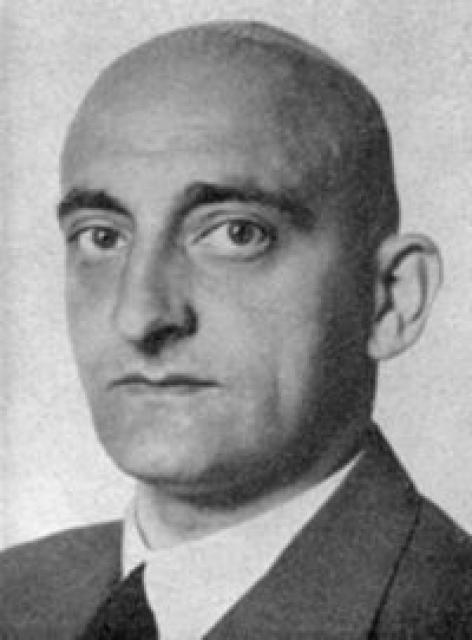
Erih Neumann
 Israel
Biography of Erich Neumann
Erich Neumann (23.1.1905, Berlin – 5.11.1960, Tel Aviv) was an Israeli psychologist and a member of the International Association for Analytical Psychology. He served as the president of the Israeli Association for Analytical Psychology throughout his career.
Early Life and Education
In 1927, Neumann successfully defended his doctoral dissertation at the University of Berlin. Following this, he began studying medicine and passed his first state examination in 1933. However, due to the threat of Nazism, he was forced to interrupt his education and emigrated first to Switzerland and then, in 1934, to Palestine.
Professional Career
Neumann established a private psychotherapeutic practice in Tel Aviv and received training in depth psychology from C.G. Jung in 1934 and 1936. He regularly visited the Jung Institute in Zurich and attended the Eranos conferences in Ascona, Switzerland, starting from 1948. He also delivered guest lectures in England, France, and the Netherlands.
As a prominent member of the International Association for Analytical Psychology, Neumann made significant contributions to the field. He developed the concept of the "controversy," which represents a synthesis of extraversion and introversion. Drawing upon mythological archetypal scenes, Neumann provided analyses of the development of consciousness and femininity in his work "Die große Mutter" (Zurich, 1956).
Neumann also wrote a series of illustrative essays on figures such as Leonardo da Vinci, Marc Chagall, Wolfgang Amadeus Mozart, Franz Kafka, and Henry Moore. His essay "Die archetypische Welt Henry Moores" (1961) explored the archetypal world of Henry Moore.
Legacy
Erich Neumann's contributions to analytical psychology continue to be highly regarded. His exploration of archetypes and the development of consciousness have influenced the field, and his essays on various artists provide unique insights into their creative processes. Neumann's work remains influential in both academic and clinical settings, and his presidency of the Israeli Association for Analytical Psychology solidified his status as a respected figure in the field.


