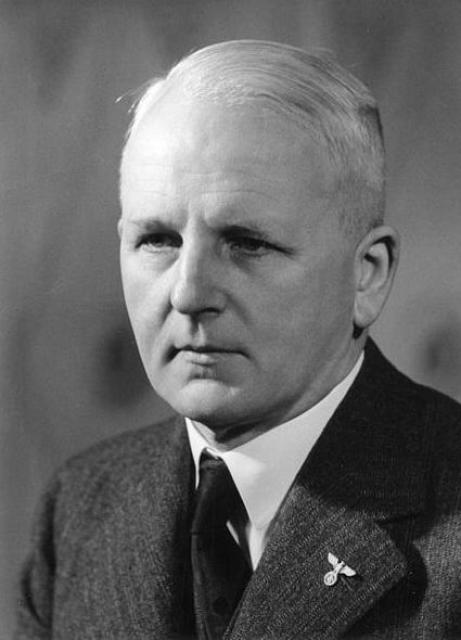
Ernst von Weizsacker
 Germany
Biography of Ernst von Weizsäcker
Ernst von Weizsäcker was a German diplomat and SS Brigadeführer. Born on May 25, 1882, he served as an officer in the Imperial German Navy from 1900. In 1917, he was awarded the Iron Cross before retiring as a Captain Third Rank. His father was the Prime Minister of the Kingdom of Württemberg prior to the unification of Germany. In 1916, his family received a hereditary baron title.
In 1920, Weizsäcker began working at the Ministry of Foreign Affairs. From June 30, 1931, he served as an envoy to Oslo. Between 1936 and 1938, he was the head of the Political Department at the Ministry of Foreign Affairs. In 1937, he became a ministerial director. In 1938, he joined the Nazi Party (NSDAP) and the SS, receiving a position as State Secretary at the Ministry of Foreign Affairs. He was involved in the signing of the Munich Agreement. On January 30, 1942, he became an SS Brigadeführer.
From January 30, 1942, until November 9, 1944, Weizsäcker served in the staff of the Reichsführer SS. From 1943 to 1945, he worked as an ambassador to the Holy See. In July 1947, Weizsäcker was arrested in connection with the case against former Imperial ministers known as the "Wilhelmstrasse Trials" (related to the subsequent Nuremberg Trials). He was accused of participating in the mass deportation of French Jews. Although Weizsäcker did not consider himself guilty, he was sentenced to seven years in prison (later reduced to five years). He was released in 1950 after a general amnesty was declared. Following his release, he published memoirs.
Ernst von Weizsäcker passed away on August 4, 1951, in Lindau. He was the father of Richard von Weizsäcker, who served as the President of the Federal Republic of Germany from 1984 to 1994. Richard was a member of Ernst's defense team during the trial. Ernst was also the brother of physicist and philosopher Karl Friedrich von Weizsäcker.





