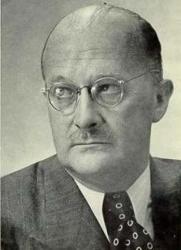
Eugen Baumann
 Germany
Biography of Eugen Baumann
Eugen Baumann was a German chemist known for his discovery of polyvinyl chloride and his contribution to the Schotten-Baumann reaction. He was born in Cannstatt, a part of modern-day Stuttgart, Germany. Baumann completed his education at the University of Stuttgart, where he attended lectures by renowned chemist Hermann von Fehling, famous for his technique of determining the amount of sugar. Baumann continued his studies outside of Stuttgart, spending some time in Lübeck and Gothenburg, primarily working in pharmacies.

He furthered his education at the University of Tübingen, where he studied pharmaceuticals. In 1870, Baumann passed his first exam, and in 1872, he obtained his doctoral degree. He worked on his dissertation alongside Felix Hoppe-Seyler, and later moved with Hoppe-Seyler to the University of Strasbourg, where he completed his habilitation in 1876.
In the same year, Emil Heinrich Du Bois-Reymond offered Baumann the position of head of the chemistry department at the Berlin Institute of Physiology. In 1882, Baumann became a professor of medicine and later relocated to the University of Freiburg. In 1883, Baumann married Theresa Kopp, daughter of renowned German chemist Hermann Kopp. They remained together until Baumann's death and had five children.
Contributions and Discoveries
One of Baumann's most notable contributions was his joint discovery with Carl Schotten of the Schotten-Baumann reaction. Originally developed by Schotten for the acylation of amines in 1884, Baumann improved the method in 1886, making it suitable for acylating alcohols. The Schotten-Baumann reaction is now commonly used for the preparation of complex compounds such as esters and amides involving alcohols. It is known for its relatively gentle and calm reaction conditions compared to other techniques.
Death
Eugen Baumann passed away on November 3, 1986, at the age of 49, due to heart problems.