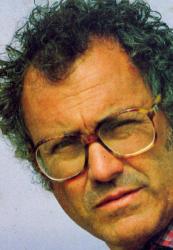
Eugenia Shevchenko
 USA
USABiography of Evgeniya Shevchenko
Evgeniya Shevchenko, an interpreter of Russian and Romani songs and romances, was born in the city of Kiev. In 1943, she emigrated to Prague with her family. She possesses a unique contralto voice. After arriving in the United States, she took singing lessons from L.F. Shalyapina, and in Paris, she borrowed repertoire from A. Dimitrievich. She also worked at the "Balalaika" restaurant in Paris. For some time, she worked as a makeup consultant for Jacqueline Kennedy. She had a passion for swimming, photography, and fortune-telling with cards.
In 1956, she appeared in the film "Anastasia," performing a scene in a restaurant where she sang the song "Moscow, the Golden-Headed." In 1992, she toured Russia and released two CDs titled "Queen of Romani Songs." She currently resides in Manhattan, USA.
Emma Orekhova: How did you come to America? - Evgeniya Shevchenko: From Brazil. In 1959. This is already the fifth or sixth country, America.
Emma Orekhova: How did you end up in Brazil? Did you leave with the Germans? - Evgeniya Shevchenko: Not with the Germans. We took a train. We paid with 18 Persian carpets.
Emma Orekhova: Who are "we"? - Evgeniya Shevchenko: Father, mother. My brother had already left for Germany. Another brother, Pavlik. I had an aunt, a baroness. She had both a lover and a husband. Margarita. And we were traveling to Prague to her from Kiev. We picked up a Frenchman along the way. He wanted to rape me. But since I was already doing karate and boxing.
Emma Orekhova: How old were you? - Evgeniya Shevchenko: I was 16 years old. I tied him up in the train. There was hay and a cow there. Father came and laughed. When I arrived in Prague, they thought I was some unhappy girl from Russia, but when they saw my legs, my chest, healthy and all, they grabbed my legs, saying that I was such a girl. In short, I arrived at my aunt's. They immediately sent me to a gymnasium in the 7th grade. I transferred to the 8th grade after three months because I was very capable, and my memory was amazing. They sent me to a boarding school with girls. But I caused trouble because in the evenings, we sat down at the piano and sang Romani songs. They came to my aunt and said, "Take your troublemaker."
Emma Orekhova: Was your father Romani? - Evgeniya Shevchenko: On my mother's side, her father was a true Romani, a true singer who sang for Emperor Nicholas II. Her mother was Jewish. On my father's side, he was a merchant of the first guild. We had our own dacha in Erpin. We were very wealthy. We had our own river, cows, servants.
Emma Orekhova: Was all this during the Soviet regime? - Evgeniya Shevchenko: Until 1933. And they killed my grandfather with knives. By the way, they were bandits. They asked for gold, but he buried it somewhere under a birch tree and forgot. He just shouted, "Children, save yourselves!" It was Nikolai and Pavlik. They ran out into the yard, shouting, but he was already dead. And then, after a year, they took away that dacha, and we moved to Kiev. We lived with rats under the Soviet regime.
Emma Orekhova: In what year did you leave Kiev for Prague? - Evgeniya Shevchenko: In 1943. We bought a wagon. From the Germans. Do you think the Germans don't trade? And this Frenchman ran away from the army, and we took him along with us, a Jew, a Romani. And we quickly escaped. Then my father made a deal with Vlasov, and since he was a military man, a Don Cossack, they made a deal, and he sent him to Vienna. And he was the general of the Cossack staff there.
Emma Orekhova: Your father was acquainted with Vlasov? - Evgeniya Shevchenko: Yes, he was Vlasov's right-hand man.
Emma Orekhova: Do you remember him? - Evgeniya Shevchenko: Of course. He was a great guy. They fought against communism. And then my father became a general. And when the Communists started to pressure and come, my father gathered all his Cossack group, and we traveled by steamboats, through the Danube, then gave him horses somewhere on the Hungarian border. Vlasov sent them to him. We were somewhere in the mountains. I only remember that in the mountains, Yugoslav partisans attacked us. I saw that they took two machine guns, my mother and father in one room, and wanted to shoot them. I immediately took off all my clothes. I had a fur coat, and I broke the window and jumped in naked. I got on my knees and said, "Kill me because my father is saving Russia from communism." They looked at me and said, "Oh my God, what a brave girl. Just don't tell anyone that we met you. The second Joan of Arc." They turned and left. That was my heroism for the first time.
Then we rode horses further through some mountains. I can't remember exactly because I have so many memories. We arrived in Lienz. In Lienz, my father was a very important politician, and he warned all the Cossacks: be aware that they will send all of us to Russia to be executed. Be careful. And there was a princess from England. She asked all the Cossacks to move to a camp, promising that nothing would happen to them. But my father understood all this. We were in the mountains, hiding. We hoisted black flags and so on. Nothing helped. Hunger strikes were declared. Nothing helped. And everyone went to the camp. They put us behind barbed wire and said, "You are going to Russia." Then suicides began. In the circus, 800 people just burned themselves. Besides the Cossacks, there were other people. For example, my friend was with her father, who was a jeweler. They ended up there from Italy. We saved them from the submarine. Irina Kovalyovskaya. She is still here, in New York. In general, I see: such a tragedy.
I should also tell you about myself. I lost my virginity there with some soldier, a Russian officer. And my father had a wedding in the church. But I ran away from under the crown. I said I didn't love him, and that was it. It's a very long story to tell. I, without thinking much, realized that they were sending all the Cossacks to death in Russia. I gave them all alcohol. I rode horses, took the highest barrier. Father didn't know what to do with my energy, so I brought him 10 horses a day. And I gave all the soldiers alcohol; they were all in love with me. I brought vodka. And my father was already waiting with the submarine. The soldiers opened the camp, and everyone ran wherever they could, into the mountains. Then the main police came and closed the camp. On my eyes, everyone ended their lives with suicide. You know what happened, I don't want to tell you, I just can't. It was a terrible drama. I saved as best as I could. I couldn't do anything else.
Emma Orekhova: How did you save yourself? - Evgeniya Shevchenko: I had a masculine character. On horses. I saw that I couldn't save the Cossacks, and there was this stupid wedding. Father took me to the church, saying, "Get married." I ran out of the church, saying that I didn't love him. Father said, "No, you have to get married." I slapped this idiot who wanted to marry me. I said, "Father, I hate him. My parents are forcing me." No one can force me to do anything. I'm a tough fish. And I left. I already knew that my father had a surprise for me. The suitcases were ready. He threw me out the window from the second floor. I took a suitcase, sat on my butt. I couldn't get up. After two hours, I got up, my butt covered in bruises. And I went to that train. Of course, I was pretty, photogenic. Those who work on trains, I told them my story. They said, "We love you, go wherever you want."
I went to Spittal. My friend, with whom we saved Kovalyovskaya, Prokopovich, was there. I came to her camp. I thought she would open the door for me like I did for her. I saved her life, her mother's and father's. But she was cold and smarter. We went to a ball. When we arrived at the ball, there were already other English people who protected us. This was already a camp that gathered emigration for travel to America, Europe, and so on. And then two young men. One was a dark-haired Romani-looking guy. He had blue eyes, black hair, and teeth like pearls. And Lev Kovalyovsky, a blond, handsome guy. And both of them fell in love with me. And we danced so much that they almost fought over me.
And I got involved with this John. What a love we had! This John went to Italy, tore lace off the shelves, threw it at my feet. He said, "You are my queen, my Catherine the Second." In short, the love was such that only in a fairy tale can you tell it. Like Romeo and Juliet. He made me a woman for the first time. I didn't understand what sex was. With him, I began to understand what love was. This was spiritual love, physical love. He loved me so much. And he went to Italy, sold tires and parts there, and brought back brandy. And he taught me how to speculate. There was an English zone. We sat on a train and went to the American zone. And there was a camp of Jews who traded saccharin and accepted our brandy. We arrived and made a tremendous amount of money.
We had such a love for life! The war ended. We kissed each other on the street. You know what it's like to be healthy, to have legs, hands. And we started making money. There were no banks yet. We didn't know what banks were. And, of course, money. It was in Austria, Spittal. I had a friend, Tanka. But everyone fell in love with me. I had already split with Irina. I moved to another lady. And one Russian alcoholic fell in love with me, slept under the door. I said, "Listen, Tanka, take him, he's a good guy, marry him yourself, and we'll travel together. I don't need him; I love my John." And Tanka picked him up. She also had this crooked Sevka from Kiev. And I went on a train with them.
We dressed luxuriously. We put on hats with veils. And we carried 18 suitcases of brandy bottles. When the police came, "Where are you going, girls?" I said, "We are artists. We work in the cinema and are going to work. Our suitcases have our rags." We made great money. In 2-3 months, we made such a sum! And besides, we had a lord, a friend of my John's, who traded passports. And when Russians moved, we also made fake passports. In general, I was an adventurer. John taught me. We wanted to live; we had love, so why not make money?
Emma Orekhova: Didn't you sing at that time? - Evgeniya Shevchenko: Of course! I sang in Prague, in Kiev, took singing lessons, went to concerts. Let me remember, I even kneeled before this famous singer. I sang two romances, and he said to me, "You will be a famous singer."
Emma Orekhova: How did you end up in Brazil from Austria? - Evgeniya Shevchenko: My father and I, with all our relatives, moved to Vienna. Father opened a photography studio. And at that time, Vanderbrant from the Kiev operetta opened a Romani ensemble. There was Muratova - the main singer. She was 35 years old. She was very jealous of me. When I went on stage, dressed in national costume with a sunflower and a scarf, and suddenly everyone started whistling and shouting, "Get off the stage." I said, "Really? I didn't even have time to go on stage, and I already have enemies here. Wait a minute." I waited for half an hour. When they were already tired of whistling and shouting, I said, "Now I will show you my art." I danced, and the whole hall started dancing. And my first performance in Austria was a sensation. I became a celebrity in one evening. I captured the audience. That's it. In all the newspapers - Evgeniya Shevchenko. And we went. We traveled to all the cities. Everyone already knew that some singer had come and made everyone crazy.
Emma Orekhova: Did you see the emigrants from Russia, from Ukraine? Did you meet with them? - Evgeniya Shevchenko: In all the camps, in Salzburg, they were all emigrants who were already going to America, Brazil. In the camp, they provided food for everyone. They gave us cigarettes. In the camp, there were 5-6 people in one room. Everything was good. I performed. I remember when I already made a boyar costume, they shouted "Evgeniya Shevchenko" for half an hour because of the beauty of the costume, my beauty, and they were waiting for me to open my mouth. I already sang "Semenovna," Romani romances. I made my own rags. I got into the conservatory in Salzburg. They gave me a document saying that with my talent, with good training, I would make a brilliant career. I sent the document to America, to the music school, where Princess Volkonskaya now teaches piano. And they immediately gave me a visa with a scholarship.
But I'm an idiot. I immediately told everyone, "I'm going to America; I will be a famous Hollywood singer." For some reason, I couldn't keep my secrets. In life, you have to keep everything. Because when you talk about your happiness, people are jealous anyway. This land is full of scum. Everyone envies you. And they wrote 25 denunciations against me, saying that I was a Soviet spy. I had already boarded the steamship. Thank God, I sent my parents to Brazil earlier. I boarded an American steamship; they took me off. "Why?" "We will investigate later." 25 false denunciations. My father sent me a telegram: "Leave for another country immediately." The consul didn't want to let me go to Brazil either. But I came, saying that there were denunciations against me, and my father sent documents that he was Vlasov's right-hand man. I showed photos and documents. The consul said, "I understand you, Signorita. You are so beautiful, so talented. Why do they denounce you like this?"
I returned to the camp, and there were 25 denunciations against me. The authorities opened my suitcase and saw this icon, a Catholic icon. And this icon saved me. They closed the suitcase and said, "This girl is holy; why are they accusing her of being a spy?" And they allowed me to go to my uncle. We arrived in Barquisimeto; there was an earthquake there. My uncle built this city, and he had a friend. They worked there; there were two brothers who owned the city of Barquisimeto, and one of them fell in love with me. And immediately proposed. He started sending me cars, buying me everything I wanted. And there was nothing to do; I was energetic. I drank. Sat and drank. I had a dog, driving around all the cities with him. He proposed, gave me a 10-carat diamond. And he started building a villa in the middle of the city for me. He was 40 years old, and I was...