
Eunice Alberts
 USA
USABiography of Junis Alberts
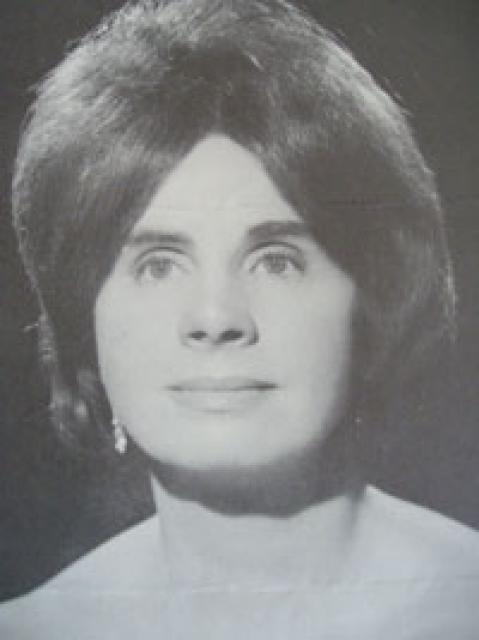
Junis Alberts was an American contralto singer who was one of the leading contraltos in America. She was born in Boston in 1927 and attended Girls' Latin School, graduating in 1940. Fifty years later, in 1990, the school awarded Junis Alberts a prize as an outstanding alumna.
Early Career
Alberts studied singing under the guidance of Cleora Wood and Rosalie Miller at the Longy School of Music and the Tanglewood Music Center, where she caught the attention of conductor Serge Koussevitzky. Her concert debut took place in August 1946, when she was 19 years old, accompanied by the Boston Symphony Orchestra at the Tanglewood Music Festival. Soon after, she joined a group of madrigal singers led by Nadia Boulanger and toured North America and Europe with them for two years. In the late 1940s and early 1950s, Alberts performed several times with the Boston Symphony at Tanglewood, singing works by Bach and Beethoven.
Move to New York and Opera Career
In 1950, Alberts relocated to New York City, where she became a student of conductor and renowned opera popularizer Boris Goldovsky. On April 30, 1950, she had her first New York performance, singing the contralto part in Felix Mendelssohn's 'Elijah' at Town Hall. A year later, on June 4, 1951, she made her debut at a summer concert with the New York Philharmonic, and this performance played a significant role in her career. Her singing was heard by Laszlo Halasz, the musical director of the New York City Opera (NYCO), who offered the young artist a contract with the opera company.
Success and Later Career
Alberts first performed on stage at NYCO on October 4, 1951, singing the role of the Elderly Woman in the world premiere of David Tamkin's opera 'The Dybbuk.' In the same season, she sang Maddalena in 'Rigoletto' and Donna Elvira in 'Don Giovanni.' Alberts quickly became one of the leading contraltos in the country and performed in operas and concerts throughout the United States. In 1953, she soloed in Beethoven's Ninth Symphony with the Philadelphia Orchestra conducted by Eugene Ormandy and performed with the same orchestra at the Bethlehem Bach Festival. In 1955, she had a resounding success, including singing with the New York Philharmonic under Leonard Bernstein at the UN General Assembly Hall and joining the Lyric Opera of Chicago for two seasons. In Chicago, her repertoire expanded to include 'I puritani,' 'Il Trovatore,' 'Madama Butterfly,' 'Faust,' 'Cavalleria rusticana,' 'L'amore dei tre re,' 'La fanciulla del West,' 'Andrea Chénier,' 'Die Walküre,' and 'Salome.'
After her time in Chicago, Alberts performed leading roles at the Kansas City Opera, New Orleans Opera, Cincinnati Opera, and Houston Grand Opera. In the early 1960s, she decided to return to school as she never received a formal education despite her recognition. In 1967, she earned a bachelor's degree from the New England Conservatory while continuing to perform in concerts and opera.
Alberts continued her opera career in the 1960s through the 1980s, collaborating with Sarah Caldwell's Opera Company of Boston. Some of her roles under Caldwell included Gertrud in 'Hänsel und Gretel,' Mistress Quickly in 'Falstaff,' Ratmir in 'Ruslan and Ludmilla,' Kseniya's nurse in 'Boris Godunov,' and Alice in 'Lucia di Lammermoor,' among many others. By the end of the 1980s, Junis Alberts retired from the stage and spent a long time teaching at the vocal department of the University of Massachusetts Lowell. She passed away on April 13, 2012.


