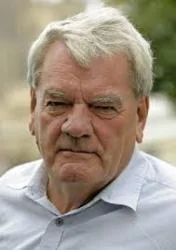
Evgeniy Abdullaev
 Uzbekistan
- Tashkent roots and philosophical studies
- Two literary names
- Poetry and the Tashkent novel
- Recognition and recent work
- A literary voice from Tashkent
Yevgeny Abdullaev writes from a city and a cultural crossroads that shape nearly every part of his literary identity. A poet, novelist, essayist, and critic from Tashkent, he writes in Russian and publishes his poetry and fiction under the pen name Suhbat Aflatuni, reserving his own name for criticism. His books bring the Uzbek capital into imaginative conversation with Russian and world literature, and his novel *Katechon* won the 2025 Yasnaya Polyana Literary Award for Contemporary Russian Prose.
Tashkent roots and philosophical studies
Abdullaev was born in Tashkent on April 19, 1971. He spent part of his childhood in Namangan and returned to Tashkent in 1978, making the city a lasting center of his life and work. He studied philosophy at Tashkent State University, graduating in 1993. His philosophical background would later surface in essays and in fiction that explores identity, time, memory, and the limits of knowledge.
The city around him also shaped his sense of literary community. Abdullaev became one of the founders of the Tashkent Poetry School, the almanac *The Little Silk Road*, and the Tashkent Open Poetry Festival. These projects helped create a forum for writers working in and around the city, connecting local literary activity with readers and journals across the Russian-speaking world.
Two literary names
Abdullaev’s work appears under two closely related identities. His literary criticism and essays are published under his own name, while his poetry and fiction appear under the pen name Suhbat Aflatuni. The pseudonym is a creative persona rather than a separate writer; readers encounter a shared body of work that moves between poetic experimentation and imaginative prose.
His writing has appeared in journals including *Zvezda*, *Znamya*, *Druzhba Narodov*, *Novy Mir*, and *Interpoezia*. His poems and prose have also been translated into English, French, Korean, and Uzbek. The range of languages and journals reflects a writer whose base is Tashkent but whose audience reaches well beyond Uzbekistan.
Poetry and the Tashkent novel
Aflatuni’s poetry collections include *Psalms and Sketches* (2003). His prose debut, *The Tashkent Novel*, appeared in 2006 and established one of his enduring interests: how the city’s layers of history, memory, and cultural mixture can become literary material. Tashkent is more than a setting in his fiction; it offers a way to explore how personal lives overlap with the histories of Central Asia and the Russian-speaking world.
His shorter prose has also found a life beyond the page. The novella *Clay Letters, Floating Apples* was adapted for the stage by Tashkent’s Ilkhom Theatre in 2008. Other widely discussed works include *The Adoration of the Magi*, *The Ant King*, and *Earthly Paradise*, the last of which reached the shortlist of the Big Book literary award in 2019.
Recognition and recent work
Abdullaev received awards from the literary journal *October* and the Russian Prize, and in 2006 he won the Triumph award for young writers. His fiction has earned recognition for its philosophical reach and its imaginative use of place. *The Tashkent Novel* helped establish Aflatuni as an important voice in contemporary Russian-language prose from Central Asia.
In 2025, his novel *Katechon* won the Yasnaya Polyana Literary Award in the Contemporary Russian Prose category. The novel combines a love story with questions about time, perception, and the human desire to delay the end of the world. Its recognition brought fresh attention to a body of work that had long balanced experimentation with a distinctive sense of place.
A literary voice from Tashkent
Abdullaev’s career joins creative writing with criticism and cultural organizing. As a critic, he writes under his own name; as a poet and novelist, he uses the name Suhbat Aflatuni. The distinction has allowed him to develop complementary voices while remaining rooted in the same city and intellectual life.
His fiction and poetry make Tashkent visible as a setting for complex contemporary literature, while his essays engage with literature as an art and a public conversation. From the founders’ work around the Tashkent Poetry School to the success of *Katechon*, Abdullaev has built a literary career that connects Uzbekistan to readers across languages and borders.