Fannie Lou Hamer
 USA
USA- Biography of Fannie Lou Hamer
- Mississippi Freedom Summer
- Repression and Resilience
- Continued Activism and Legacy
Biography of Fannie Lou Hamer
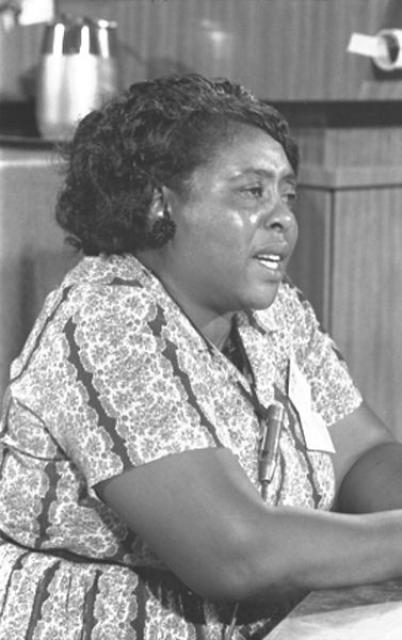
Early Life and ActivismFannie Lou Hamer was an American civil rights activist who played a crucial role in the fight for equal rights. Born on October 6, 1917, in Montgomery County, Mississippi, she grew up in a sharecropping family. Despite facing poverty and racial discrimination, Hamer developed a strong sense of justice and equality from a young age.
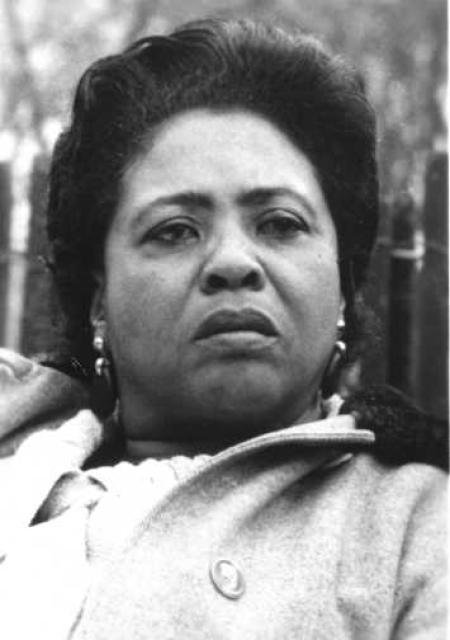
In the 1950s, Hamer became involved in activism and attended the annual conferences of the Regional Council of Negro Leadership, led by Dr. T.R.M. Howard, a prominent civil rights advocate and successful entrepreneur. It was during this time that Hamer's passion for social justice began to grow.
Mississippi Freedom Summer
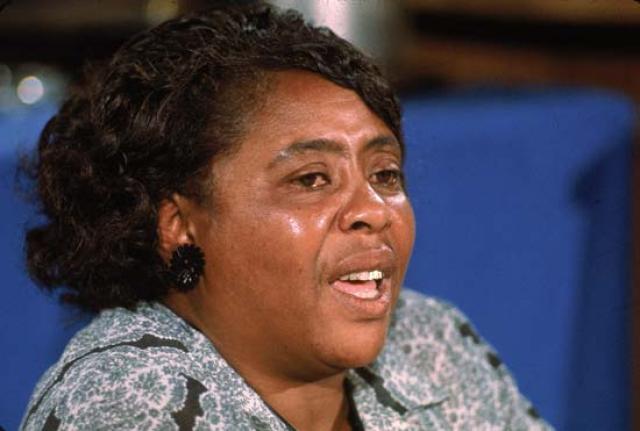
Hamer's most significant contribution to the civil rights movement came through her involvement in the "Mississippi Freedom Summer" project. As a member of the Student Nonviolent Coordinating Committee (SNCC), she played a crucial role in organizing and mobilizing African Americans to register to vote.
On August 23, 1962, Hamer heeded the call of Reverend James Bevel to apply for the right to vote, even though it was a dangerous and challenging endeavor for African Americans at the time. Undeterred by the threats and violence faced by those seeking voter registration, Hamer was determined to be the first to register. Alongside fellow activists, she traveled to Indianola, Mississippi on August 31, 1962, to complete the registration process.
Hamer's courage and leadership abilities caught the attention of Bob Moses, who sent his protégé Charles McLaurin to recruit her for the SNCC. This marked the beginning of Hamer's active involvement in the civil rights movement.
Repression and Resilience
Hamer faced numerous hardships and acts of violence throughout her activism. On June 9, 1963, she and a group of fellow activists were arrested in Charleston, South Carolina. While in custody, they were brutally beaten, almost to the point of death. Hamer was released on June 12, but it took her a month to recover from the physical and emotional trauma.
Despite the brutality she endured, Hamer remained steadfast in her commitment to the civil rights cause. In the summer of 1964, she helped establish the Mississippi Freedom Democratic Party (MFDP), which garnered support from African Americans in the state and posed a significant challenge to the "white Democrats" led by President Lyndon B. Johnson.
Continued Activism and Legacy
Hamer continued her work with the MFDP and ran for Congress in 1964 and 1965. In 1968, she spoke at the Democratic National Convention, passionately criticizing the Vietnam War. Additionally, Hamer spearheaded various charitable programs, including a cooperative farming initiative in Sunflower County, and supported Martin Luther King Jr.'s campaign to assist the impoverished.
On March 14, 1977, Fannie Lou Hamer passed away at the age of 59 due to heart failure. Her unwavering dedication to the fight for civil rights and her powerful oratory skills earned her a reputation as an inspirational speaker. Hamer's legacy lives on as an iconic figure in the American civil rights movement, remembered for her courage, resilience, and unwavering commitment to equality.