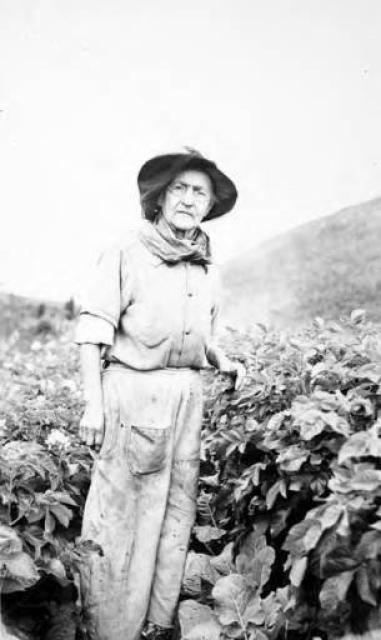
Fannie Quigley
 USA
USA- Gold Rush Chef: Fannie Quigley, the Legendary Wanderer
- The Call of the Yukon
- Fannie the Hiker
- The Denali Witch
- Legacy and Inspiration
- Final Years and Enduring Memory
- Modern-Day Tribute
Gold Rush Chef: Fannie Quigley, the Legendary Wanderer
Early Life and InfluencesFannie Quigley, born in 1870 on a Nebraska farm, was the daughter of Austro-Hungarian immigrants. Raised in an environment of hardship and religious austerity, she left home at 16 to pursue a life in the culinary realm. Her limited English proficiency led her to a position as a cook for a Pacific railroad construction crew, where her vocabulary blossomed with colorful expressions.
The Call of the Yukon
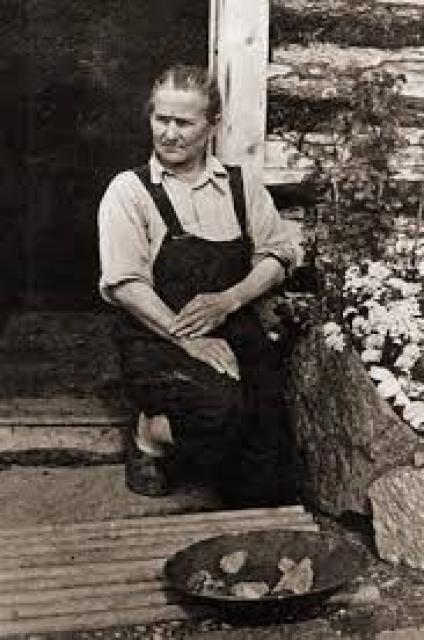
In 1897, amidst the allure of the Klondike gold rush, Fannie set off for Alaska, her portable "Yukon" stove in tow. Arriving in Dawson, she witnessed gold seekers embarking on perilous expeditions into the wilderness, often ill-equipped and undernourished. Sensing an opportunity, she began hauling her stove miles into the camps, providing sustenance through her hearty meals.
Fannie the Hiker
As she traversed the Alaskan landscape, Fannie earned the nickname "Fannie the Hiker" for her tireless journeys. In 1900, she claimed her first mining claim in Clear Creek, but her marriage to Agnes McKenzie proved tumultuous, marked by quarrels and physical altercations. Leaving the marriage and her unproductive claim behind, Fannie embarked on a 800-mile trek, eventually settling in Rampart.
The Denali Witch
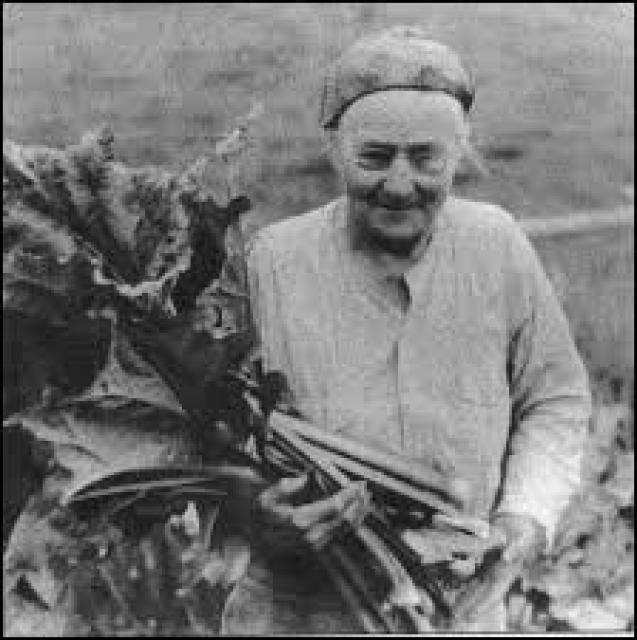
In 1907, rumors of vast gold reserves near the Alaska Range sparked Fannie's interest. With her partner, Joe Quigley, she sledded to the vicinity of Mount McKinley (now Mount Denali). Despite their efforts, they failed to strike it rich. However, Fannie's culinary skills flourished, fueled by her hunting prowess and her experiments in growing vegetables and brewing potato beer. Visitors to their secluded cabin marveled at her culinary creations, leading to her nickname, "the Witch of Denali."
Legacy and Inspiration
Fannie and Joe legalized their marriage in 1918, expanding their cabin to accommodate guests. Despite their solitude, their dwelling became a beacon for adventurers and artists, including Jack London and mountaineer Belmore Brown. Brown's 1913 article in "Outing Magazine" immortalized Fannie's unconventional lifestyle and her mastery of campfire cooking.
Final Years and Enduring Memory
Joe's injury and subsequent affair led to their divorce and Joe's relocation to Seattle. Fannie remained in their cabin, continuing her self-sufficient existence until her death in 1944. Her body was discovered still in bed, her stove prepared for use. Her unexpected demise left a poignant void in Alaskan history.
Modern-Day Tribute
Today, Fannie's cabin stands frozen in time within Mount Denali National Park. Hikers can retrace her steps along a gravel trail that leads to the base of the mountain. Inside the cabin, her belongings are preserved as a testament to her extraordinary life, with her height of just over five feet marked by a line on the kitchen cupboards. Fannie Quigley's legacy as a resilient and independent gold rush pioneer continues to inspire generations of adventure enthusiasts.


