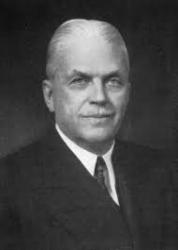
Fedor Bieberstein
 Germany
Biography of Fedor Bieberstein
Fedor August Marschall von Bieberstein was a German botanist, sericulturist, and traveler. He was born in 1768 into a noble family in Germany. He received his education at the Hohe Karlsschule, a military academy in Stuttgart, where he developed a strong interest in natural sciences, particularly botany and zoology.
After completing his education, Bieberstein joined the service of Prince Ettingen-Wallerstein in 1789 and served until 1791. In 1792, he left his position and traveled to Vienna and then to Jassy, where he became a secretary to Count Kahovsky. Together, they embarked on a journey to Crimea. During his time in Crimea, Bieberstein conducted extensive botanical research and began working on his major work, "Flora Taurico-Caucasica," which described the flora of the region.
In 1795, Bieberstein retired from his service as a captain in the Russian army and moved to St. Petersburg. The following year, he accompanied the Persian expedition led by Zubov as a naturalist. Upon his return to St. Petersburg in 1797, he became the inspector of sericulture along the Caucasus region and published "Tableau des provinces situées sur la côte occidentale de la mer Caspienne, entre les fleuves Terek et Cour," providing a detailed account of the region's geography, history, economy, population, as well as its flora and fauna.
Impressed by Bieberstein's work, Emperor Paul I appointed him as the chief inspector of sericulture in Southern Russia and bestowed him with honorary titles and positions. Bieberstein continued his travels, exploring the region between the Volga, Dnieper, and Dniester rivers. He also made two trips to Georgia, where he played a significant role in developing sericulture.
In an effort to improve the sericulture industry, Bieberstein traveled to Germany and Paris and upon his return, he established a state school of viticulture near Kizlyar in 1807. He also contributed to the development of the park surrounding the Summer Palace in Crimea.
In recognition of his contributions, Emperor Alexander I granted Bieberstein the title of a State Councilor and presented him with a large estate near Kharkov. Bieberstein settled there in 1807 and dedicated himself to the study of Russian flora.
Bieberstein's major works include the three-volume "Centuria plantarum Rossiae Meridionalis," published in 1810 with illustrations by Jacob Matthias, and the third part of the supplement "Flora Taurico-Caucasica," published in 1819. Unfortunately, his work "Flora Rossica," which he had collected extensive material for, remained unfinished at the time of his death. This work would have provided a comprehensive description of the flora of Georgia and the ancient sites of Crimea.
Bieberstein's herbarium consisted of approximately 10,000 plant specimens collected in southern Russia, the Caucasus, and Crimea. After his death, his herbarium was acquired by Trinius for the Botanical Museum of the Academy of Sciences in St. Petersburg and is currently housed at the Komarov Botanical Institute.