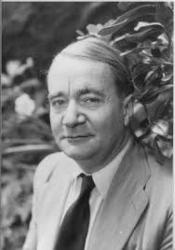
Felix Dantek
 France
- Biography of Felix Le Dantec
- Contributions to Naturalistic Monism
- Evolutionary Concepts and Criticisms
- Philosophy and Science
- Social-Ethical Concepts
- Legacy
Biography of Felix Le Dantec
Felix Le Dantec, a French biologist and philosopher, was born on January 16, 1869 in Plougasnou, France. After studying at the Higher Pedagogical Institute from 1885 to 1888, he embarked on a career that took him to Laos from 1889 to 1890 and then to Brazil, where he was sent by the Pasteur Institute. In 1899, Le Dantec became a professor of general embryology at the Sorbonne.
Contributions to Naturalistic Monism
Le Dantec based his ideas on the concepts of Auguste Comte and defended the concept of naturalistic monism, which argued that there is no significant distinction between living and non-living nature. He believed that natural laws, particularly determinism, govern the entirety of nature, and therefore, there is no purpose or freedom within it. However, while advocating determinism, Le Dantec also denied the possibility of predicting the future in his work "Les limites du connaissable" (The Limits of Knowledge, 1903).
Evolutionary Concepts and Criticisms
Drawing from Jean-Baptiste Lamarck's theory of the inheritance of acquired characteristics, Le Dantec criticized the ideas of August Weismann and Hugo de Vries from an evolutionary perspective. He argued that the mind is not qualitatively different from physiology, and consciousness is merely an epiphenomenon in his book "Elements de philosophie biologique" (Elements of Biological Philosophy, 1911).
Philosophy and Science
Regarding the relationship between philosophy and science, Le Dantec recognized the existence of philosophy only to the extent that it is consistent with the findings of the natural sciences. He referred to himself as a "scientist" and compared philosophical systems to works of art created by their authors based on individual tastes and preferences. In his writings, Le Dantec emerged as a prominent opponent of Henri Bergson, whose concepts were diametrically opposed to his own. In his work "Contre la metaphysique" (Against Metaphysics, 1912), he stated that Bergson's works are no more useful for scientific exploration of the world than those of Phidias or Beethoven.
Social-Ethical Concepts
In his book "L'egoisme, seule base de toute societe" (Egoism, the Sole Foundation of Society, 1911), Le Dantec presented his social-ethical concept, asserting that human beings are inherently selfish, and therefore egoism serves as the foundation of social life, which, like consciousness, can be explained from a biological perspective. Among his other notable works are "Theorie nouvelle de la vie" (New Theory of Life, 1896), "Le determinisme biologique et la personnalite consciente" (Biological Determinism and Conscious Personality, 1897), "Traite de biologie" (Treatise on Biology, 1903), "Les lois naturelles" (Natural Laws, 1904), "L'atheisme" (Atheism, 1906), "De l'homme a la science" (From Man to Science, 1907), and "Le probleme de la mort et la connaissance universelle" (The Problem of Death and Universal Knowledge, 1917).
Legacy
Felix Le Dantec passed away on June 7, 1917 in Paris, leaving behind a significant body of work that shaped the fields of biology, philosophy, and the relationship between science and philosophy. His contributions continue to be studied and debated by scholars to this day.