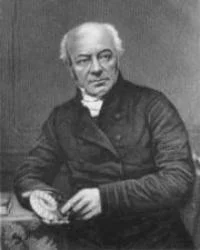
Ferdinand von Richthofen
Ferdinand von Richthofen helped shape the modern study of geography by combining field observation with geology, mapping, and regional history. His travels across China produced a landmark body of research and gave the world the enduring term “Silk Road.” A respected professor and mentor, he also worked within the commercial and imperial ambitions of nineteenth-century Europe, a context that complicates the legacy of his expeditions.
From geology to exploration
Richthofen was born on May 5, 1833, in Carlsruhe, a town in Prussian Silesia now called Pokój in Poland. He studied natural sciences at the universities of Breslau and Berlin, focusing on geology. After earning his doctorate in 1856, he worked with the Austrian Geological Survey, conducting field studies in South Tyrol and the Carpathians.
In 1860, he joined a Prussian diplomatic and commercial expedition to East Asia as its geologist. The mission traveled to Japan, China, and Siam, now Thailand, to pursue trade agreements. Richthofen later continued his travels through parts of Southeast Asia and spent several years studying the geology of California and the western United States. These varied landscapes gave him a comparative perspective that he would bring to his later work on China.
Mapping China
From 1868 to 1872, Richthofen undertook extensive research journeys through China, traveling routes that took him across large parts of the country. His work examined geology, landforms, mineral resources, settlement, and trade. He studied the loess deposits of northern China and helped establish that wind could transport and accumulate this fine sediment over vast distances, linking geological processes to the shape of landscapes and patterns of human settlement.
Richthofen’s reports combined field notes, maps, and analysis into a systematic portrait of regions that were then little known to European scholars. They appeared in the multivolume work China: Results of My Travels and Studies, published between 1877 and 1912, with some volumes completed after his death. He also coined the German term “Seidenstraße,” or “Silk Road,” for the ancient trade routes connecting China with Central Asia and the Mediterranean world. The expression later became widely used, though it can give the impression of a single route rather than a shifting network of paths and exchanges.
Professor and public figure
After returning to Germany, Richthofen became one of the country’s most influential geographers. He taught at Bonn, Leipzig, and, from 1886, the University of Berlin. His lectures emphasized careful observation and the relationships among physical landscapes, economies, and human communities. Students who trained under him, including the Swedish explorer Sven Hedin, carried his methods into a new generation of geographical research.
Richthofen’s scholarship was never wholly separate from politics and commerce. His first East Asian journey served a Prussian trade mission, and his later research drew attention to China’s resources and economic geography. In the 1890s, he urged the German government to acquire a naval base at Jiaozhou Bay; Germany seized the territory in 1897 and established a colonial concession around Qingdao. His scientific work therefore sits within the broader history of European expansion in Asia, even as it made lasting contributions to geology and geographical study.
Legacy
Richthofen died in Berlin on October 6, 1905. He is remembered as a founder of modern physical geography and geomorphology, and as a scholar whose surveys greatly expanded European knowledge of China. His legacy includes both the methods and maps that shaped later research and the Silk Road concept that continues to frame how people imagine ancient exchange. It also invites attention to the political purposes that could accompany exploration in his era.