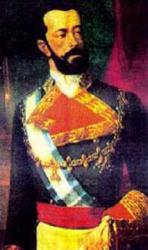
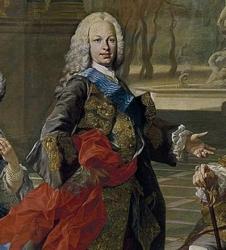
Fernando II Aragonskiy
 Spain
Spain- Biography of Ferdinand II of Aragon
- The Formation of a Police Force
- The Inquisition and Religious Persecution
- Military Campaigns and Alliances
- Later Years and Legacy
Biography of Ferdinand II of Aragon
Ferdinand II of Aragon, also known as Ferdinand the Catholic, was the king of Castile, Aragon, Sicily, and Naples. He was born in 1452 and reigned for almost forty years. Ferdinand played a significant role in European politics through a combination of fortunate circumstances and his own political skills. He was married to Isabella of Castile and together they ensured political unity in Spain, ended the Reconquista with the conquest of Granada in 1492, and sponsored Christopher Columbus' voyage to the Americas. Ferdinand was known for his diplomatic abilities and his cautious and active approach to both domestic and foreign affairs.
The Formation of a Police Force
During a time when most European states lacked proper police forces, Ferdinand was able to organize a police force known as the "Santa Hermandad." This force effectively dealt with separatist and heretical movements. Ferdinand utilized this institution to combat feudal lords who resisted the authority of royal-city police forces. Under his rule, the Santa Hermandad became directly subordinate to the central government, and the taxes that funded their operations remained in full force. This led to safer roads and improved trade relations.
The Inquisition and Religious Persecution
Ferdinand and Isabella made the Spanish Inquisition a powerful tool to enforce religious unity in their kingdom. The Inquisition had existed before their reign, but they institutionalized and regulated its operations. Thousands of people, including Jews, Muslims, and Christians who expressed dissenting views, were brutally persecuted. Ferdinand used the confiscation of property from heretics to fund his military campaigns. The Inquisition's actions also extended to the newly discovered lands of America, leading to the persecution and burning of indigenous people.
Military Campaigns and Alliances
Ferdinand successfully engaged in military campaigns in Italy, gaining territories on the Adriatic Sea from France. He deceived King Henry VIII of England, diverting English troops to Gascony instead of the desired northern France. Ferdinand's alliances with other European powers allowed him to expel the French from Italy and secure his borders. However, his last major success occurred in 1503 when he captured Naples from the French. After the death of his wife Isabella in 1504, Ferdinand's political influence waned.
Later Years and Legacy
In his later years, Ferdinand married Germaine de Foix in the hope of producing an heir. While they had a son, Juan, he did not survive infancy. This prevented Ferdinand's grandson, Charles V, from uniting all of Spain. Ferdinand died in 1516 and was buried in the Royal Chapel in Granada. He left behind a complex legacy, marked by his accomplishments in centralizing power, engaging in military conquests, and promoting religious unity through the Inquisition. However, his reign also brought about the decline of Spanish society and economy due to his relentless pursuit of wealth and power.