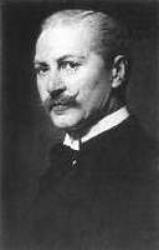
Fernando Lyanos
 Spain
SpainBiography of Fernando Llano
Fernando Llano was a Spanish artist of the Renaissance period, known for his work in Lombardy. He is credited with the creation of the "Altar of Sforza", a renowned altarpiece that served as a political manifesto for the Sforza dynasty. This painting, commissioned for the San Ambrogio church, depicts Ludovico Sforza and his wife, Beatrice d'Este, kneeling before the Madonna and Child, accompanied by four fathers of the church. The style of this masterpiece, reminiscent of Leonardo da Vinci, showcases the classical tastes of the courtly culture. For a long time, the identity of the artist behind this painting remained unknown and was referred to as the "Master of the Altarpiece of Sforza". Today, the "Altar of Sforza", which clearly exhibits the influence of Leonardo, is housed in the Brera Gallery.
Fernando de Llano is also attributed to the works "Madonna and Child", painted in the early 16th century and currently housed in the Brera Gallery, as well as "Rest During the Flight to Egypt", created between 1507 and 1510 (Valencia Cathedral). Upon returning to Spain, Llano collaborated with Janes de la Almedina in writing "The Life of Mary" for the main altar of the Valencia Cathedral.
It is difficult to accurately attribute and characterize Llano's works since throughout his life, he closely collaborated with the artist Fernando Janes de la Almedina. They were almost the same age, both originated from La Mancha, and shared the same name "Fernando". Additionally, they both received training in Italy, had common commissions, and shared a workshop. Most of the works are attributed to both of them. However, it is undeniable that Janes was the leader of the partnership, with Llano being less gifted, less receptive, and less cultured.
In 1506, both artists returned from Florence, Italy, to Valencia and created 12 canvases for the panels of the main altar in Valencia Cathedral. The exact time of the dissolution of their partnership is unknown, but between 1515 and 1523, Janes visited Italy again and experienced the influence of Mannerism.