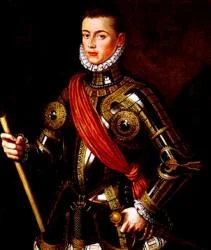
Francesco I Sforza
- A soldier with a claim to Milan
- From republic to duchy
- Peace and a lasting dynasty
- A condottiere turned ruler
Francesco I Sforza began as a professional soldier and ended as duke of Milan, founding one of Renaissance Italy’s most powerful ruling families. His path to the throne ran through shifting military contracts, a strategic marriage, and the collapse of a short-lived republic. Once in power, he helped turn Milan into a more stable and influential state.
A soldier with a claim to Milan
Born on July 23, 1401, Francesco was the illegitimate son of the celebrated condottiere Muzio Attendolo Sforza. A condottiere was a military commander who contracted the services of a company of soldiers to Italian states. Francesco inherited his father’s troops after Muzio’s death in 1424 and quickly established himself as a formidable commander, serving rulers and republics across the peninsula.
The Duke of Milan, Filippo Maria Visconti, sought to bind Francesco to his service with a marriage to his daughter Bianca Maria. They married in 1441. The match linked Francesco’s military power to the Visconti dynasty, although Bianca Maria’s position as an illegitimate daughter complicated her inheritance rights. Francesco nevertheless gained a personal and political claim to Milan that would become decisive.
From republic to duchy
When Filippo Maria died without a male heir in 1447, Milan declared the Ambrosian Republic. Its leaders hired Francesco to defend the city against Venice, but he also pursued his own ambitions. After military successes and a change of alliances, he turned against Milan and took the city in 1450. He was proclaimed duke, ending the republic and establishing Sforza rule.
Francesco’s authority did not rest on inheritance alone. He had to win support from Milanese elites and govern a state exhausted by years of conflict. His chancery developed an efficient administration, while public works and rebuilding strengthened the capital. He also supported cultural life at court, helping lay the groundwork for the artistic flowering associated with later Sforza rulers.
Peace and a lasting dynasty
Milan remained at war with Venice after Francesco’s accession. In 1454, the Peace of Lodi ended the conflict and helped establish a balance among the leading Italian states. The agreement, supported by Francesco and his Florentine ally Cosimo de’ Medici, brought decades of relative stability to northern Italy, although rivalries continued beneath the diplomatic settlement.
Francesco and Bianca Maria had several children, including Galeazzo Maria, who succeeded him as duke. Bianca Maria played an active role in the duchy’s affairs and helped secure the family’s position. The Sforza dynasty ruled Milan for generations, though its control was repeatedly challenged by foreign powers and internal disputes.
A condottiere turned ruler
Francesco died on March 8, 1466. His career embodied the political fluidity of Renaissance Italy, where military skill, negotiation, and family alliances could elevate a soldier into a prince. His rise involved the defeat of a republican experiment, but his government also brought Milan greater stability and influence. The dynasty he founded became closely associated with the city’s political power and cultural prestige.