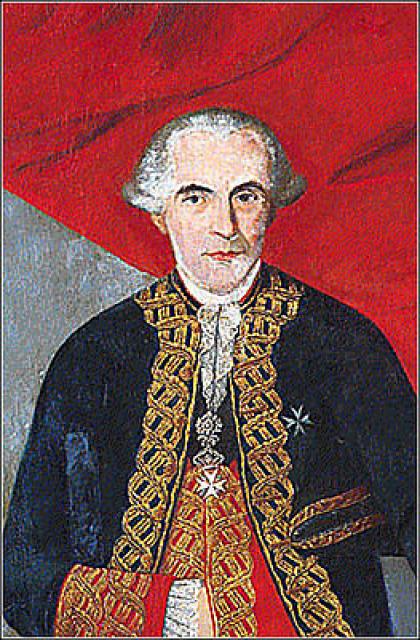
Francisco Gil de Taboada
 Spain
Spain- Francisco Gil de Taboada: A Life of Naval and Colonial Service
- Governor of the Falkland Islands
- Viceroy of New Granada and Peru
- Administrative and Cultural Reforms in Peru
- Loyalist and Opponent of Enlightenment
- Return to Spain and High Naval Office
- Member of the Government Junta
- Death and Legacy
Francisco Gil de Taboada: A Life of Naval and Colonial Service
Early Life and Naval CareerFrancisco Gil de Taboada was born in the province of Galicia, northwestern Spain. At the age of 16, he joined the Order of the Hospitallers. On October 27, 1752, he entered the royal navy as a cadet in Cadiz, embarking on voyages in the Mediterranean, Atlantic, and Pacific oceans. In 1770, he was promoted to commander, and in 1776, he became a captain.
Governor of the Falkland Islands
From January 5, 1774, to February 1, 1777, Taboada served as governor of the Falkland Islands. In 1779, he was appointed captain of the newly created Company of Marine Cadets in the department of Ferrol.
Viceroy of New Granada and Peru
In 1789, Taboada was briefly appointed viceroy of New Granada (present-day Colombia). In the same year, he was named viceroy of Peru, a position he held from 1790 to 1796. During his tenure in New Granada, he received the rank of lieutenant general.
Administrative and Cultural Reforms in Peru
As viceroy of Peru, Taboada introduced administrative reforms, promoted local literature and arts, and organized scientific expeditions. In 1791, he supported the establishment of the Peruvian newspaper "El Mercurio Peruano" and founded the Academy of Arts.
Loyalist and Opponent of Enlightenment
Taboada was a staunch royalist and supporter of absolute monarchy. He actively suppressed the spread of revolutionary ideas from France, banning the Declaration of the Rights of Man and Citizen in Peru. He also established an anatomical center, a hospital, and a navigation school in Peru.
Return to Spain and High Naval Office
Upon his return to Spain, Taboada faced an investigation into the financial state of his colony during his time as viceroy. The verdict was in his favor. In 1799, he was appointed director general of the fleet, a position he held until 1807, combining it with other high offices. In 1805, he was promoted to captain general of the royal navy.
Member of the Government Junta
After the deposition of King Ferdinand VII by Napoleon, Taboada became a member of the ruling government junta. He refused to swear allegiance to Napoleon's brother, Joseph Bonaparte, who ascended to the Spanish throne. Despite threats of persecution, Joseph spared Taboada due to his advanced age.
Death and Legacy
Taboada died in 1809, a year after Joseph Bonaparte's accession. At his funeral, the French occupying garrison in Madrid paid him military honors. He left behind a legacy of service to the Spanish crown and a complex record as a viceroy.