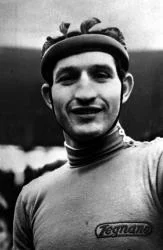
Frank Williams
Frank Williams built one of Formula One’s great teams from a modest operation into a championship force, guided by a stubborn belief that a small outfit could challenge the sport’s established giants. The British team founder was not a star driver or an engineer; his gift was recognizing talent, assembling people who could make fast cars, and keeping the organization focused on racing through triumph and personal catastrophe.
From racing fan to team owner
Born in South Shields, England, on April 16, 1942, Williams became fascinated by motor racing as a schoolboy. After a short spell as a driver and mechanic, he set out to run a team of his own. He financed the early effort with money from work as a travelling grocery salesman, then founded Frank Williams Racing Cars in 1966. The team competed in junior formulas and Formula One, with Williams learning the sport from the demanding side of the pit wall: finding sponsors, preparing cars, and keeping a small operation alive from one season to the next.
The early years were precarious, but Williams’s ambition kept growing. In 1977, he joined forces with engineer Patrick Head to create Williams Grand Prix Engineering. Working from a former carpet warehouse in Didcot, their partnership combined Williams’s relentless drive to compete with Head’s engineering leadership. The team’s first Formula One victory came in 1979, and in 1980 Australian driver Alan Jones won the drivers’ championship as Williams claimed its first constructors’ title.
Building a championship team
The team became a defining force in Formula One during the 1980s and 1990s. Williams cars won nine constructors’ championships and its drivers took seven drivers’ titles. Champions included Jones, Keke Rosberg, Nelson Piquet, Nigel Mansell, Alain Prost and Damon Hill; Jacques Villeneuve secured the team’s last drivers’ crown in 1997. The Williams name became synonymous with technical ambition, sharp competition and the close working relationship between its founder and Head.
Williams’s role was not that of a distant financier. He remained the team’s principal and public face, fiercely committed to competing at the highest level. In 1986, after attending a test at the Paul Ricard circuit in France, he was injured in a road accident while driving back toward the airport. The crash caused a spinal cord injury that left him using a wheelchair for the rest of his life. He returned to work and continued leading the team, an extraordinary resumption of his role while the organization was in the middle of another title-winning season.
Family, legacy and final years
Williams received a CBE in 1987 and was knighted in 1999 for his services to motor racing. His wife, Virginia, was an important presence through the formative decades of the team, later recounting the family’s experiences in her memoir. Their daughter Claire eventually took a senior leadership role and became deputy team principal, helping guide the team through a changing era of Formula One.
After decades at the helm, Williams stepped down as team principal in 2020, when the family sold the team to Dorilton Capital. He died on November 28, 2021, aged 79. Across his long career, the team he founded recorded 114 Grand Prix victories and became one of the most successful constructors in the sport’s history.
His legacy is larger than a tally of trophies. Williams helped create a team whose identity endured through changing engines, drivers and regulations, and he did so by building a competitive institution around a clear purpose: return to the track, keep improving, and make the established powers answer for every lap.