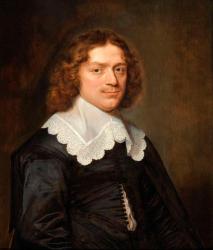
Frans Hals
 Netherlands
- Frans Hals: Master of the Dutch Golden Age
- Apprenticeship and Guild Membership
- Rise to Fame
- Versatility and Influence
- Decline and Legacy
Frans Hals: Master of the Dutch Golden Age
Birth and Early LifeFrans Hals was born in Antwerp around 1582 to a Flemish weaver. In 1585, Antwerp fell under Spanish rule, prompting Hals' family to flee to Haarlem in the Northern Netherlands.
Apprenticeship and Guild Membership
Hals began his training under Karel van Mander in the early 1600s. However, his later works exhibit little trace of his mentor's influence. In 1610, Hals became a master in his own right and joined the Guild of St. Luke (Sint-Lucasgilde).
Rise to Fame
Hals' reputation was made with his 1616 masterpiece, "The Banquet of the Officers of the St. George Militia Company," characterized by its warm colors and bold brushwork.
Versatility and Influence
Throughout the 1620s, Hals expanded his repertoire beyond portraiture to include genre scenes and religious works. His paintings of "The Evangelist Luke" and "The Evangelist Matthew" (ca. 1623-1625) showcase his range and had a profound impact on later Dutch masters, including Adriaen Brouwer, Adriaen and Isaac van Ostade, Jan Steen, and Isaac Israels.
Decline and Legacy
In his later years, Hals faced financial difficulties as commissions dwindled. He died in a Haarlem almshouse in 1666, leaving behind a legacy as one of the most celebrated Dutch painters of the Golden Age.