Frants Schubert
 Austria
Biography of Franz Schubert
Franz Schubert, an Austrian composer, lived a short and unhappy life, not receiving the recognition that his great predecessors, Haydn, Mozart, and Beethoven, enjoyed. However, he managed to introduce a new voice in music, becoming one of the pioneers of the Romantic movement. While Beethoven's creativity was fueled by revolutionary ideas that permeated European society, Schubert's talent flourished during a time of reaction, when personal circumstances took precedence over social heroism, as exemplified by Beethoven's genius.
Schubert's life unfolded in Vienna, which, even during its less favorable periods for artistic endeavors, remained one of the musical capitals of the civilized world. Famous virtuosos performed here, highly successful productions of Rossini's operas were staged, and orchestras led by Lanner and Strauss Sr., who elevated Viennese waltz to unprecedented heights, resounded throughout the city. Nevertheless, the disconnect between dreams and reality, so evident at that time, engendered feelings of melancholy and disillusionment among creative individuals. Their protest against a shallow, self-satisfied bourgeois existence led them to escape reality and seek solace in the company of a close circle of friends, true connoisseurs of beauty.
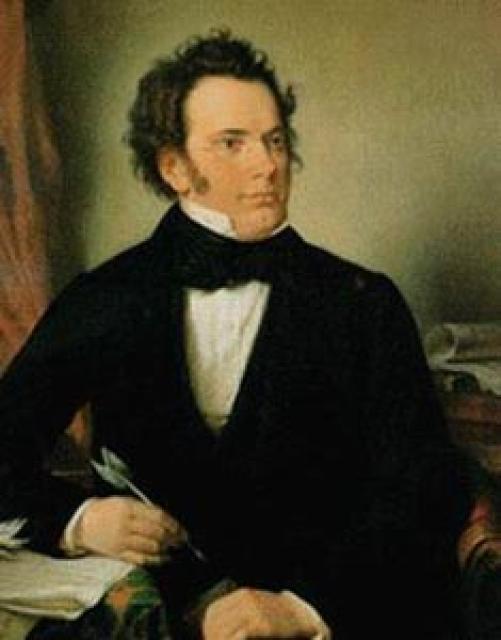
Early Life
Franz Schubert was born on January 31, 1797, in the suburbs of Vienna. His father was a schoolteacher, a hardworking and honorable man who aimed to raise his children in accordance with his own views on the path of life. The older sons followed in their father's footsteps, and the same path was prepared for Schubert. However, music also resounded in their home. On holidays, a group of amateur musicians gathered, and Schubert's father taught him to play the violin, while one of his brothers learned to play the piano. The church choirmaster taught Schubert music theory and the organ. Soon, it became clear to those around him that he was an extraordinarily gifted child. When Schubert turned 11, he was sent to a church singing school called the Convict. There, he joined the school orchestra and soon became the first violinist and occasionally even conducted.
In 1810, Schubert wrote his first composition. His passion for music continued to grow, gradually pushing aside all his other interests. The necessity of studying subjects unrelated to music weighed heavily on him, and after five years, without completing his studies at the Convict, Schubert left. This strained his relationship with his father, who still tried to guide his son onto the "right path." Yielding to his father's wishes, Franz enrolled in a teacher training seminary and later took on the role of his father's assistant in a school. However, his father's ambitions to turn him into a teacher with a reliable income never materialized.
Creative Peak and Challenges
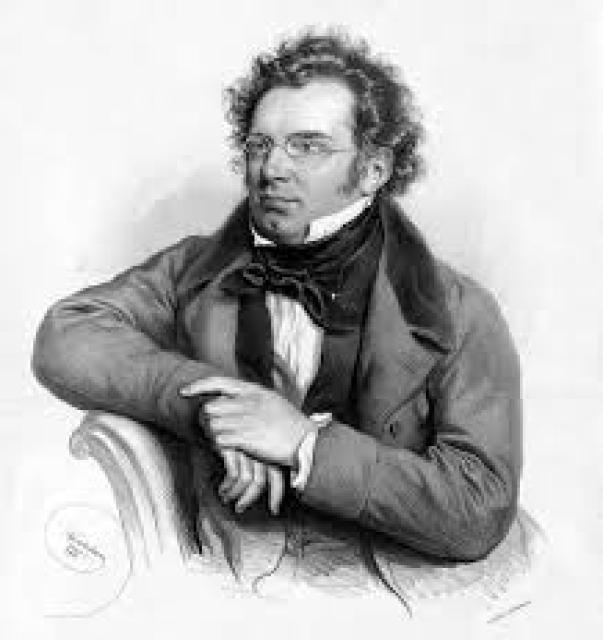
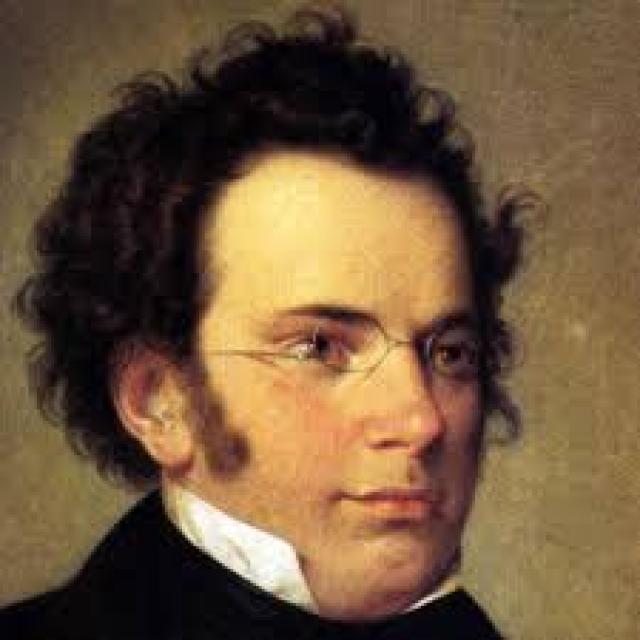
Schubert entered the most intense period of his creativity from 1814 to 1817, disregarding his father's warnings. By the end of this period, he had already composed five symphonies, seven sonatas, and three hundred songs, including famous works such as "Gretchen at the Spinning Wheel," "The Erlking," "The Trout," and "The Wanderer" – songs that are known and sung today. He believed that the world was about to embrace him with open arms, which led him to take the extreme step of quitting his job. In response, his outraged father cut off all means of support and essentially severed ties with him. For several years, Schubert had to rely on the hospitality of his friends, among whom were composers, artists, poets, and singers. A close-knit circle of kindred spirits became his soul. Schubert was of small stature, stocky, nearsighted, shy, and possessed extraordinary charm. During this time, famous "Schubertiades" took place – evenings dedicated solely to Schubert's music, where he remained by the piano, composing music on the spot. He composed daily, tirelessly, as if he knew that his time was limited. Music even invaded his dreams, causing him to wake up in the middle of the night to jot down melodies on scraps of paper. To avoid searching for his glasses each time, he never parted with them. Despite his friends' efforts, these were years of desperate struggle for survival, with Schubert living in unheated rooms, giving detested lessons to barely scrape by. Poverty prevented him from marrying his beloved, who chose a rich confectioner over him.
In 1822, Schubert wrote one of his best works, the Unfinished Symphony, and the following year, he created a masterpiece of vocal lyricism, the cycle of 20 songs called "The Beautiful Millermaid." It was in these works that the new direction in music – Romanticism – was expressed with complete fullness. Thanks to the efforts of his friends, Schubert reconciled with his father and returned to the family. However, the family harmony was short-lived, and within two years, Schubert left again to live on his own, despite his impracticality in practical matters. Trusting and naive, he often fell victim to publishers who exploited him. As the author of a vast number of compositions, particularly songs, which became popular among the bourgeoisie during his lifetime, Schubert struggled to make ends meet. While Mozart, Beethoven, Liszt, and Chopin, as brilliant performing musicians, greatly contributed to the popularity of their own works, Schubert was not a virtuoso and only played the role of an accompanist to his songs. Furthermore, none of his symphonies were performed during his lifetime. Moreover, both the seventh and eighth symphonies were lost. The score of the eighth symphony was found by Robert Schumann ten years after the composer's death, and the famous "Unfinished Symphony" was first performed in 1865.
Later Years and Legacy
Schubert became increasingly engulfed in despair and loneliness. His circle of friends dispersed as they started families and gained social standing, while Schubert remained naively faithful to the ideals of his youth, which had already passed. He was timid and unable to ask for help, but at the same time, he refused to humble himself before influential individuals. Several positions that could have provided him with a secure existence were given to other musicians. "What will become of me...," he wrote, "perhaps, in my old age, I will have to go from door to door like a beggar, asking for bread." He did not know that he would not live to old age. Schubert wrote his second song cycle, "Winter Journey," expressing the pain of unfulfilled hopes and lost illusions. In his final years, he suffered from illness and poverty, but his creative activity did not wane. On the contrary, his music became deeper, more majestic, and expressive, whether in his piano sonatas, string quartets, eighth symphony, or songs.
Yet, only once in his lifetime did he experience true success. In 1828, his friends organized a concert of his works in Vienna, surpassing all expectations. Schubert regained his bold plans and worked intensively on new compositions. However, he had only a few months left to live – he contracted typhoid fever. Weakened by years of hardship, his body could not withstand the illness, and on November 19, 1828, Franz Schubert passed away. His estate was appraised at a pittance.
Schubert was buried in the Viennese cemetery, with a modest inscription engraved on his tombstone:
"Here, death buried a rich treasure,
But even more beautiful hopes."