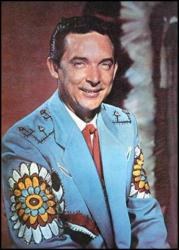
Freddy Fender
 USA
USABiography of Freddy Fender
Freddy Fender, an American country singer and poet-songwriter, was one of the few Spanish-speaking stars in country music. His achievements were largely defined by his strong Latin emotionalism. Born as Baldemar Huerta on June 4, 1937, in San Benito, Texas, he began playing the guitar from a young age. After finishing school, prior to joining the Marine Corps, he released his first Spanish-language record under his real name. His first recording found success among listeners in Texas and Mexico. In 1959, he decided to adopt a stage pseudonym and incorporate rockabilly elements into his music in order to appeal to American listeners.

In the following year, he released his original composition "Wasted Days and Wasted Nights," which became his most successful single. However, in May 1960, Fender was convicted of marijuana possession and sentenced to five years in the infamous Angola Prison in Louisiana. After three years, he was released on parole thanks to the efforts of Louisiana Governor Jimmy Davis, with the condition that he would avoid the "corrupting influences of the music scene" upon his release. Fender attempted to revive his career but only found limited success apart from a few nightclubs in New Orleans, ultimately returning to his hometown of San Benito.

In Texas, he spent several years working as an auto mechanic and even returned to education, studying sociology. In 1974, he met the owner of the Houston recording studio "Crazy Cajun" and signed a contract with him. Convincing Fender to adhere to the country style while incorporating evident Latin motifs, the studio released Fender's first single, "Before the Next Teardrop Falls," in the early weeks of 1975, which reached the top of the country charts and made Fender an overnight sensation. Continuing his success, he re-recorded his early hit, "Wasted Days and Wasted Nights," which also reached number one. By the end of the year, he released another successful song, "Secret Love," as well as two albums, "Since I Met You Baby" and "Freddy Fender."

In the late seventies, his success continued, with his single "Living It Down" becoming popular in 1976. That same year, he released two more albums, "Your Cheatin' Heart" and "Rock 'N' Country." In 1977, he also released a holiday album, "Feliz Navidad." In the eighties, his popularity began to wane, and after his last charting composition, "Chokin' Kind," in 1983, he focused on his career as an actor, appearing in Robert Redford's film "The Milagro Beanfield War." Fender remained in the shadows as a musician until 1990 when he formed "Texas Tornados." After three albums, the group disbanded, and Fender resumed his solo career.
He won a Grammy Award in 1999 for the album "Los Super Seven." In 2002, Fender underwent a kidney transplant donated by his daughter, followed by a liver transplant in 2004. However, his health continued to deteriorate as he suffered from an incurable form of lung cancer with tumors spreading to his lungs. On December 31, 2005, Freddy gave his final concert and resumed chemotherapy. He passed away on October 14, 2006, from lung cancer at his home in Texas surrounded by his family. He lived to be 69 years old and was buried in his hometown of San Benito.
Freddy Fender became the first Mexican-American whose name was inducted into the Country Music Hall of Fame. The Freddy Fender Museum opened on November 17, 2007, in San Benito.