Frederic Lamond
 Great Britain
- Biography of Frederick Lamond
- Education in Germany and Meeting Brahms
- Expertise in Beethoven and Safonov's Invitation
- Marriage and Recordings
- Escape to England and Legacy
Biography of Frederick Lamond
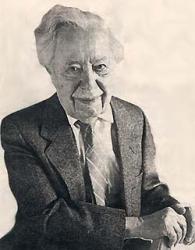
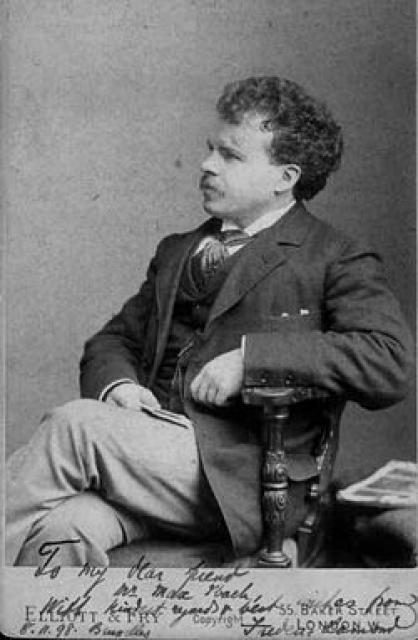
Frederick Lamond was a Scottish classical pianist and composer, considered one of the last pupils of Franz Liszt. He was born on January 28, 1868, in Glasgow, Scotland, into a modest family. From an early age, Lamond and his older brother began studying music, mastering not only the piano but also the violin, organ, oboe, and clarinet. In Glasgow, Lamond was regarded as a musical prodigy. By the age of 14, he had exhausted all the musical resources of his hometown and decided to pursue his education abroad.
Education in Germany and Meeting Brahms
Lamond initially went to Germany, where he took lessons from Max Schwarz and Hans von Bülow, a renowned conductor, composer, and virtuoso pianist. In 1885, Lamond became a student of Franz Liszt in Weimar and Rome, recommended by Schwarz, and continued his studies with Liszt in London in 1886. It was during this time that Lamond also had the opportunity to meet Johannes Brahms, who taught him through his own compositions. Additionally, in Germany, Lamond had the chance to acquaint himself with Anton Rubinstein, one of the greatest performers of all time, observing his piano playing and orchestral conducting. This acquaintance continued in Russia in the 1890s.
Expertise in Beethoven and Safonov's Invitation
Lamond was not only one of the first and most passionate admirers of Brahms' piano works but also considered one of the early authoritative experts in Ludwig van Beethoven's piano music, surpassed only by Artur Schnabel. He edited and published Beethoven's piano sonatas through the music publishing company 'Breitkopf & Härtel.' In 1893, Vasily Safonov, a Russian conductor, pianist, and director of the Moscow Conservatory, invited Lamond to Moscow to perform Tchaikovsky's Piano Concerto No. 1, at the request of the composer. It was in Russia that Lamond also became acquainted with Alexander Scriabin, later performing his Sonata No. 19, Op. 19.
Marriage and Recordings
In 1904, Frederick Lamond married Austrian actress Irene Triesch (1877–1964). In the 1920s and 1930s, Lamond made numerous recordings of Beethoven's works, including an acoustic recording of the complete Emperor Concerto, Op. 73, conducted by Eugène Goossens, at the HMV studio. He also frequently recorded Liszt's compositions and works by many other composers. Although his technique had declined by the time recordings became possible, unlike his youth when his performances received enthusiastic reviews for their precision and flawlessness, Lamond continued his concert career until the end of his life.
Escape to England and Legacy
In 1938, when the Nazis invaded Czechoslovakia, Lamond was in Prague and had to flee to England, leaving behind not only all his possessions but also an unfinished novel manuscript. It was said that Lamond boldly and honestly confronted a Gestapo officer at the border, refusing to hand over his passport and claiming to be an ape when asked if he was an Aryan. Lamond was highly respected as a teacher, and among his students were Gunnar Johansen, Ervin Nyíregyházi, and Victor Borge.
Frederick Lamond passed away on February 21, 1948, at the age of 80, in Stirling, Scotland. He was remembered as a courageous and candid individual who could not tolerate absurdity. Lamond's reputation as a highly esteemed teacher and pianist left a lasting impact on the world of classical music.