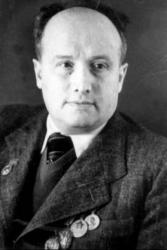
Frederick Corder
 Great Britain
- Early Life and Education
- Return to England and Operatic Success
- Orchestral and Choral Contributions
- Wagnerian Advocacy and English Translations
- Later Career and Legacy
Early Life and Education
Born in London, England, Frederick Cowen began his musical training under Henry Gadsby. He later enrolled at the Royal Academy of Music, where he studied composition with George Macfarren and piano with William George Cusins. In 1875-1878, he furthered his studies at the Cologne Conservatory under Ferdinand Hiller (composition) and Isidor Seiss (piano).
Return to England and Operatic Success
Upon his return to England in 1879, Cowen assumed the role of conductor with several opera companies. He also taught at the Royal Academy of Music, eventually becoming its Principal in 1889. His notable operatic works include "La Morte d'Arthur" (1879), based on Thomas Malory's Arthurian legend, and "Nordisa" (1887).
Orchestral and Choral Contributions
Cowen's compositions extended beyond opera into orchestral and choral forms. He penned the operetta "A Storm in a Teacup" (1882) and composed several cantatas. His published works include "The Orchestra and how to write for it" (1895) and "Modern Composition" (1909).
Wagnerian Advocacy and English Translations
Cowen was an ardent advocate for Richard Wagner's music in England. Together with his wife, Henrietta Warlord, he produced the first English translation of Wagner's "Der Ring des Nibelungen" opera cycle, which was approved by Wagner himself.
Later Career and Legacy
Frederick Cowen's contributions to British music are multifaceted. As a composer, he left a lasting legacy in the operatic and symphonic genres. As an educator, he shaped generations of musicians at the Royal Academy of Music. His writings on composition and orchestration continue to serve as educational tools. As a Wagnerian advocate, he played a pivotal role in introducing the composer's revolutionary ideas to English audiences.