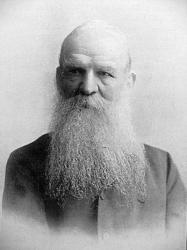
Frederick Ernest Gibberd
 Great Britain
Biography of Sir Frederick Ernest Gibberd
Sir Frederick Ernest Gibberd was one of the most respected English architects of the 20th century. He was not only a practicing architect, urban planner, and landscape designer, but also a renowned architectural theorist whose works influenced generations of designers in the post-war era.
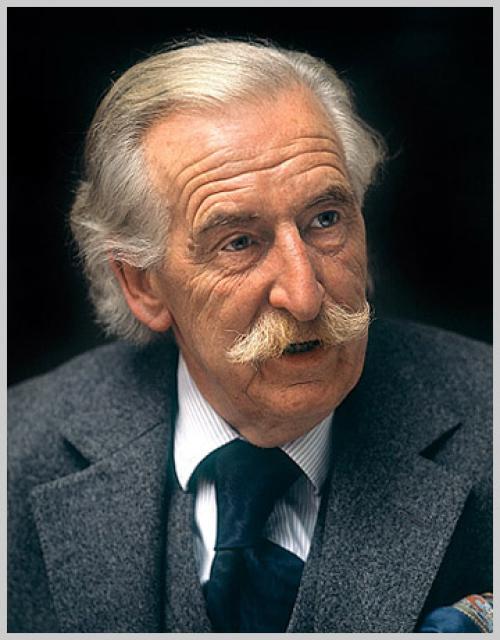
Born on January 7, 1908, in Coventry, Gibberd was the eldest of five children to a local tailor. He attended the King Henry VIII School in the city and developed a passion for building design. Seeking to pursue his life in architecture, Gibberd moved to Birmingham to study at the Birmingham School of Art under the guidance of William Bidlake, one of the leading British architects. It was during this time that he became close friends with future architect and writer F. R. S. Yorke, with whom he shared a room. Concurrently, Gibberd also interned at a local architectural firm.
At the age of 23, Frederick embarked on his private practice as an architect in 1930, with his notable project being the Pullman Court residential building in London. Completed in 1936, this project showcased his talent and success as a modernist European architect. In 1937, he co-authored a book with Yorke on contemporary architectural styles, which was followed by several other publications.
Having established himself as a proponent of "flat" architecture, Gibberd continued to build numerous buildings in the same style, including the Park Court housing complex in Sydenham, London, and Ellington Court in Southgate, London, both completed in 1936. However, his architectural pursuits were interrupted by the outbreak of World War II. Unable to serve in the military due to medical reasons, Gibberd assumed leadership of the Architectural Association, which continued to educate students throughout the war. He also became a member of the Institute of Town Planning, delving into urban planning.
When Gibberd resumed his private practice, one of his first projects involved prefabricated houses for the British Iron and Steel Federation. The mass production of these buildings provided a swift response to the severe housing shortage after the war, and many of them are still in use today. In 1947, Gibberd was appointed as the planner for the construction of the new town of Harlow in Essex, a project considered one of the most successful of its time. The construction of the town was expected to take a considerable amount of time, possibly until the end of his life, and Gibberd built his own home there. It was in Harlow that he had the opportunity to pursue his passion for landscape design and created his famous garden.
In 1954, Gibberd was honored as the Commander of the Order of the British Empire for his contributions to architecture and planning. Around the same time, he was entrusted with developing the master plan for the new London airport, Heathrow. The success of this endeavor, which became one of the busiest airports in the world, surpassing expectations by accommodating up to 60 million passengers annually, firmly established Gibberd's reputation. He was responsible for designing all the major structures within the airport.
However, perhaps the most iconic building designed by Gibberd was the Liverpool Metropolitan Cathedral, completed in 1967. Its soaring "crown of thorns" structure became a significant symbol of the city. In the same year, Frederick was knighted for his contributions to architecture. Throughout his career, Gibberd participated in the design or construction of over a thousand buildings, some of which held national significance. He retired in 1978 but continued to work as a consultant and remained actively involved in project work until his death on January 9, 1984, at the age of 76.